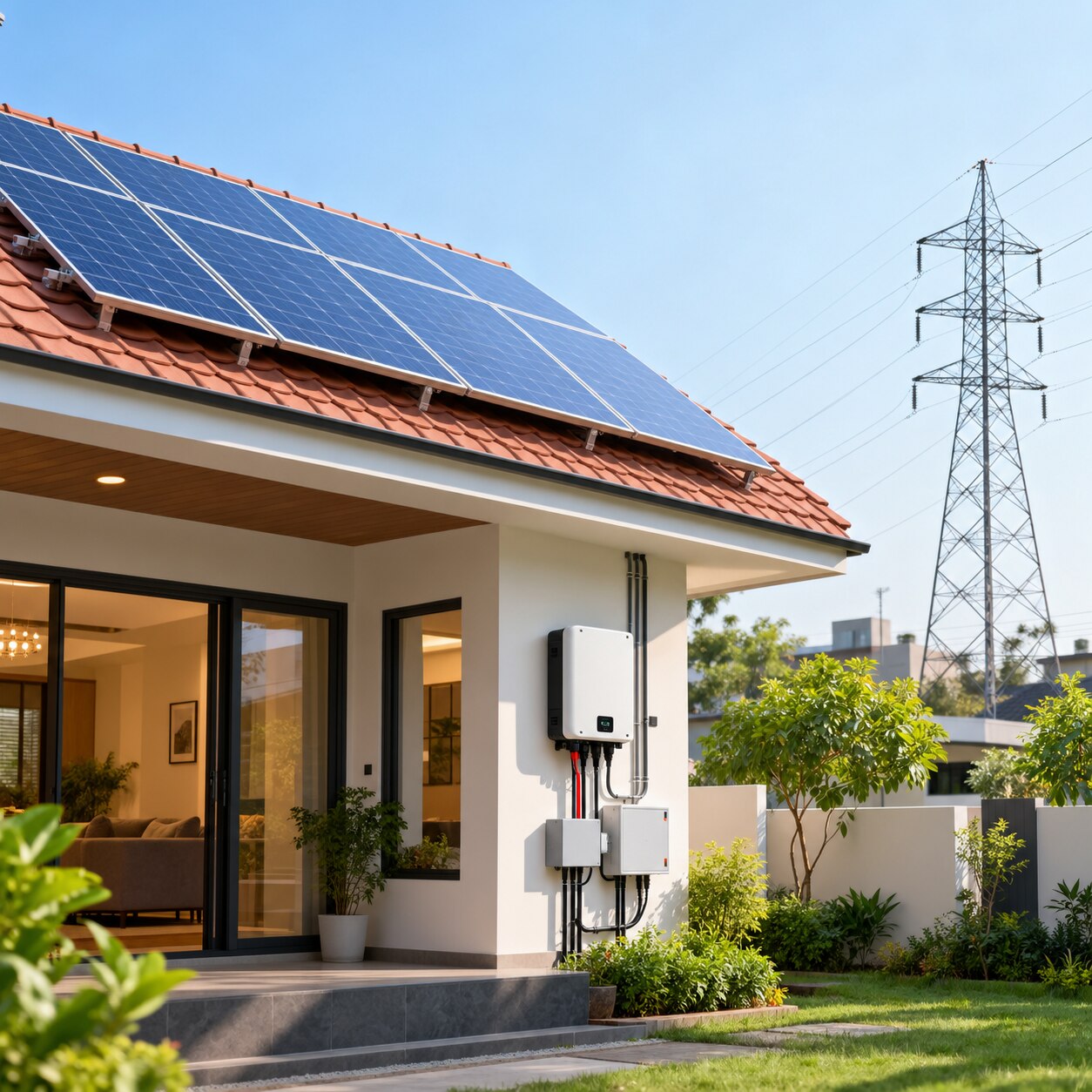
A solar system can lower the electricity you import without keeping every appliance running during a blackout. By the end, you will be able to compare system types, estimate a realistic capacity, match appliances to inverter and battery limits, and check whether a proposed design fits your bill, roof, utility rules, and outage needs.
Key takeaways
- Choose on-grid solar to reduce annual grid purchases; choose off-grid to operate without utility support.
- Size solar capacity from household consumption, sunlight, battery needs, and outage requirements.
- A grid-tied inverter cannot power your home during an outage without backup equipment.
- Compare tariffs, export credits, and Maharashtra utility rules before estimating savings.
Which solar system reduces grid dependence most effectively?
Choose an on-grid solar system if “dependence” means buying fewer electricity units over a year. It still relies on the grid at night and during outages: a conventional grid-tied inverter shuts down under anti-islanding protection when utility voltage disappears. An off-grid solar system removes utility support only by balancing generation, storage, and household demand independently.
| Option | What it does | Dependence outcome |
|---|---|---|
| On-grid | Solar offsets daytime demand and exports surplus | Lower annual imported units, but grid required at night and during outages |
| Hybrid | Combines grid, solar, batteries, and approved backup equipment | Lower imports plus backup for selected circuits |
| Off-grid | Uses solar and storage without utility support | Lowest grid reliance, with full responsibility for low-sun periods |
A hybrid solar system needs islanding controls, a transfer or disconnect device, and a backed-up load panel; panels alone cannot supply outage power. Whole-home backup requires the inverter and transfer equipment to handle the service rating, simultaneous loads, motor starting current, and continuous loads.
A critical-loads panel for refrigeration, lighting, communications, and selected outlets is often more practical.
Choose on-grid for lower imported energy, hybrid for lower imports plus selected outage protection, and an islandable microgrid only when you can fund and manage prolonged low-sun conditions. That is grid dependence versus grid electricity consumption: lower consumption does not automatically mean independence.
How much solar capacity does your household actually need?
Start with the bill, not the panel catalogue. Record 12 months of monthly units in kilowatt-hours, then find sanctioned load in kW, tariff slabs, fixed charges, and demand charges.
Solar offsets imported energy and some slab or demand costs; it does not normally remove fixed charges, and demand charges change only if your billed peak demand falls.
| Charge | What solar can change | What usually remains |
|---|---|---|
| Monthly units | Imported kWh after solar generation | Electricity used at night or during low-sun periods |
| Tariff slabs | Units purchased in each slab | The tariff structure set by the utility |
| Fixed charges | Usually nothing | Connection or service charges |
| Demand charges | Possibly, if peak demand falls | Charges based on recorded or contracted kW |
Use this worksheet for each month, then total the year:
- Monthly kWh: __
- Target annual offset: __% of imported energy
- Daytime load from 9 a.m. to 5 p.m.: __ kWh
- Evening and overnight load: __ kWh
- Expected annual AC kWh per installed kW: __
- Usable roof area after shading and obstructions: __ m²
A roof survey must remove areas shaded by tanks, parapets, trees, and neighbouring buildings before you calculate panel count. Ask for a month-by-month production model using your roof’s azimuth and tilt, shading, temperature, seasonal sunlight, inverter losses, and clipping—not a peak-sun-hours multiplication.
Size within usable roof area, sanctioned load and interconnection limits, and the point where midday generation exceeds household demand, battery charging capacity, or allowed export.
Which appliances can solar and batteries run after sunset?
A battery can run lights, fans, a refrigerator, router, television, and communications equipment after sunset. It may not run every appliance together. Battery capacity kWh versus inverter power kW solves different problems: usable battery energy determines runtime, while inverter output determines simultaneous operation.
| Load | Main constraint | Design check |
|---|---|---|
| Lighting and fans | Low continuous demand | Total watts and hours |
| Refrigerator | Compressor starting surge | Inverter surge rating |
| Pump | Motor starting surge | Starting current and motor compatibility |
| Air conditioner | High running and compressor-start demand | Continuous and surge output |
| Water heater and induction cooker | Resistance heating draws roughly full rated power | Inverter kW and battery discharge limit |
A critical loads panel can place refrigeration, lighting, selected outlets, fans, a router, and a small pump on backup while leaving heating and cooling on the grid. Check both the inverter’s continuous output and its motor-starting capability; a refrigerator or pump can trip an undersized inverter even when its running wattage looks modest.
For example, a battery with 5 usable kWh delivering 90% after conversion provides 4.5 kWh. A 100-watt refrigerator, four 50-watt fans, 100 watts of lighting, and 200 watts of communications equipment total 600 watts, giving a theoretical runtime of 7.5 hours. Cycling variation, standby use, and reserve settings reduce that figure.
Adding a 2-kilowatt water heater or air conditioner raises the inverter requirement immediately, even if the battery has enough energy. Backup sizing follows outage loads and duration; bill-reduction sizing follows midday surplus, evening demand, tariffs, and battery cycling.
How do tariffs, exports, and Maharashtra utility rules change the result?
A lower number of imported units does not mean a zero bill or freedom from the grid. Fixed charges remain, demand charges may follow your peak power, and tariff slabs, time-of-use prices, export compensation, credit expiry, and battery losses can change the result.
1. Check the energy flow. A grid-connected rooftop system without batteries normally exports surplus electricity during the day and imports after sunset. Export credits and fixed charges affect the bill, but credits do not create physical backup: a conventional grid-tied inverter shuts down when utility voltage disappears under anti-islanding protection.
2. Check the tariff calculation. Compare the value of one exported kilowatt-hour with the cost of an imported unit in each slab and time period. A battery can shift solar energy into expensive evening hours, but round-trip losses, reserve settings, cycling limits, and battery replacement affect the gain.
A full battery also cannot serve a high-power peak if its inverter is undersized.
3. Check the connection before approving equipment. In Maharashtra, verify the current Maharashtra electricity regulations, your local distribution utility’s interconnection process, and current MSEDCL net metering or export rules where applicable. Confirm approved inverter functions, export limits, meter requirements, application documents, credit treatment, and whether backup equipment is permitted under the connection arrangement.
At the design stage, ask Madhuri Solar or any qualified installer for the utility paperwork path, a single-line diagram, expected monthly imports and exports, battery usable capacity, and backed-up circuits. Compare projected annual imported kWh, exported kWh, fixed charges, and outage coverage under the named utility’s current rules—not a promised bill percentage.
Related products
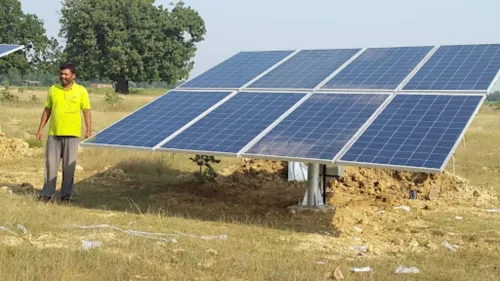
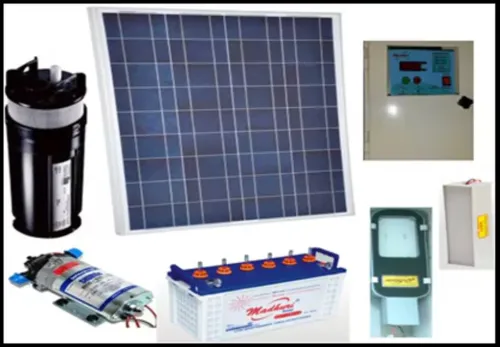
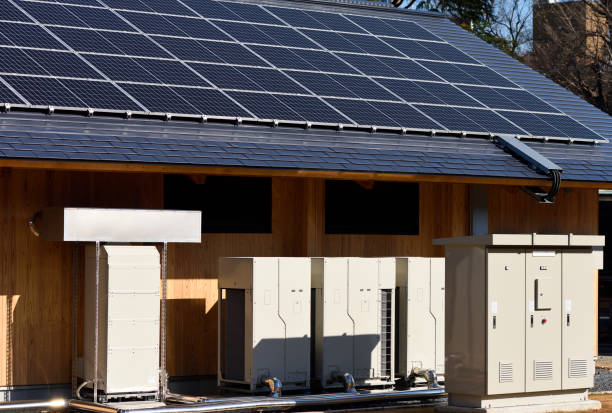 | Solar Offgrid System A Solar Offgrid System is an independent energy solution that operates without relying on the main power grid. View product → |
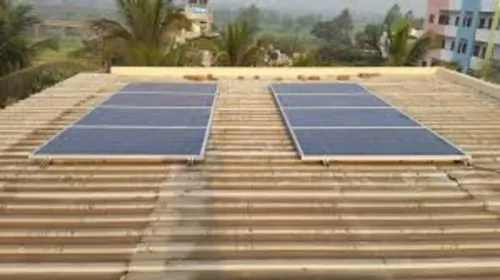
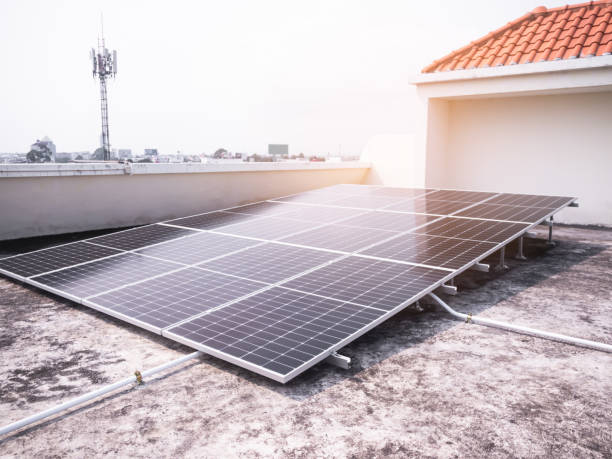 | Solar Rooftop Ongrid System A Solar Rooftop Ongrid System is an efficient, eco-friendly solution that converts sunlight into electricity. View product → |
How do you test whether the system will keep reducing dependence over time?
Approve the design only after a month-by-month forecast survives the difficult months, not just an attractive annual average. Include monsoon or winter low-sun seasonal solar production, roof shading, inverter clipping, battery round-trip efficiency, reserve settings, and solar degradation over time.
| Goal | Design test | Typical result |
|---|---|---|
| Annual energy offset | Compare monthly PV output with monthly demand | Lower annual imported kWh |
| Lower evening imports | Shift usable midday surplus through the battery | Reduced after-sunset purchases |
| Lower peak demand | Test simultaneous appliance loads and inverter limits | Smaller grid peak |
| Outage resilience | Model backed-up circuits, duration, and recovery | Protection without full independence |
Add future load electrification to the forecast: an EV, heat pump, electric water heater, or resistance backup heating can lower the covered percentage even when solar output stays constant. Ask for separate results with those loads included.
For outages, define the circuits and duration. Refrigerator, lights, router, selected outlets, and a pump require a different design from whole-home air conditioning and water heating; whole-home backup versus selected circuits is not a cosmetic choice. Multi-day outages during poor solar conditions require load shedding, additional generation, or another dispatchable source.
A modest battery alone does not create independence.
Set approval criteria in writing:
- Expected imported kWh for every month
- Minimum battery reserve
- Maximum simultaneous load
- Recovery time after an outage
- Conditions under which the grid remains necessary
Frequently asked questions
Which solar system reduces grid dependence most effectively?
An on-grid system reduces electricity purchased over a year, while an off-grid system removes utility support by combining solar, batteries, and managed demand.
How much solar capacity does a household actually need?
Size the system from your household’s electricity use, daytime demand, battery requirements, and the amount of backup you need after sunset.
Which appliances can solar and batteries run after sunset?
Solar and batteries can run selected household loads after sunset when battery capacity and inverter output match their energy and starting-power requirements.
How do tariffs, exports, and Maharashtra utility rules change the result?
Electricity tariffs, export compensation, and Maharashtra utility rules affect the value of each unit you generate, use, export, or store.
How do you test whether a solar system keeps reducing grid dependence?
Track solar generation, battery charge and discharge, grid imports, exports, outages, and monthly electricity units over time.