Your electricity bill tells you how much energy your home used, but it does not by itself reveal the inverter, panels, or battery you need. By separating energy consumption from appliance power, mapping when loads run, and checking your roof and utility limits, you can compare system sizes on evidence rather than guesswork.
Key takeaways
- Average 12 months of kWh use before choosing system size.
- Size the inverter for simultaneous appliance loads, not total appliance wattage.
- Compare roof area, shading, orientation, and local sunlight before estimating panel output.
- Choose battery capacity from essential loads and required backup hours.
Turn Your Electricity Bills Into a Solar Energy Target
Start with the kWh figure on each of your last 12 electricity bills, not the bill amount. Add those readings to find annual electricity consumption, then divide by 12 for average monthly use and by 365 for average daily consumption. Record the highest-use months separately; air-conditioning or electric heating can make a yearly average misleading.
- Add the 12 monthly kWh readings and note the minimum and maximum months.
- Divide annual kWh by the location-specific annual production expected from 1 kWdc of panels.
- Round the result to a practical panel capacity, then check whether roof space and utility limits allow it.
For example, 900 monthly kWh averaged across a year equals 10,800 annual kWh. If a PVWatts model predicts 1,400 kWh per year for each kWdc at your site, the first-pass solar system size is 10,800 ÷ 1,400, or about 7.7 kWdc.
The model accounts for irradiance, weather, orientation, shading and system losses; do not substitute a fixed national yield.
This calculation targets annual energy, not hourly independence. A system can match yearly consumption yet leave you buying power at night or during cloudy periods. Compare interval, hourly or sub-hourly usage with projected production when battery storage, time-of-use billing or high self-consumption matters.
Also keep kWh separate from kW: kWh measures energy used, while kW describes simultaneous appliance demand and belongs in inverter sizing.
Use an Appliance Worksheet to Size the Inverter
An inverter is sized for power, not monthly energy. Record each appliance’s nameplate watts and convert watts to kilowatts by dividing by 1,000. A 1,500-watt induction cooktop uses 1.5 kW while operating; its energy use depends on how many hours it runs.
Build the worksheet with these columns:
- Appliance and quantity
- Running watts or kilowatts
- Hours per day
- Starting surge
- Whether it must operate during an outage
Add the running load for appliances that can operate at the same time. Include the refrigerator, lights, internet equipment, and water pump together if that is a realistic combination. A home with modest monthly kWh use can still need substantial inverter capacity if several high-power appliances overlap.
Treat starting surge separately. Motors and compressors in pumps, refrigerators, air conditioners, and washing machines can briefly demand several times their running power. Use the manufacturer’s starting-surge figure or measure it with a power meter; then check that the inverter’s surge rating and surge duration cover the event.
A unit that handles the running load but not the starting surge can trip when a pump or compressor starts.
For backup, select only the circuits you intend to keep powered. A critical-loads panel or automatic load-shedding control can exclude an electric water heater, oven, or vehicle charger and reduce the required inverter capacity.
Also verify the battery’s power rating in kW: adequate battery kWh determines runtime, but inadequate battery output can still cause a startup failure.
Estimate Panel Output From Your Roof and Local Conditions
A 6,000 kWh annual home needing a modelled specific yield of 1,400 kWh per kWdc would require about 4.3 kWdc of panel capacity: 6,000 ÷ 1,400. A 450-watt module count would then be about ten panels, giving 4.5 kWdc. The modelled yield—not the panel’s nameplate rating—determines the size.
Use a location-specific production model such as PVWatts rather than a fixed national rule of thumb. Enter:
- Roof orientation, including separate roof faces if panels will point in different directions
- Roof pitch, because tilt changes the sun angle and annual capture
- Shade from trees, chimneys, parapets, and nearby buildings, with its time of day and season
- Module and inverter assumptions, including losses and the DC-to-AC ratio
Shade deserves a close inspection. A shaded module in a string can restrict current through other modules, so a small shaded area can cause a larger output loss than its panel area suggests. Module-level power electronics or shorter strings can reduce that mismatch, but add equipment and maintenance points.
Your installer should show annual kWh, monthly production, clipping, and the shading assumptions behind the quote. PVWatts defaults include a 1.2 DC-to-AC ratio, 96% inverter efficiency, and 14% system losses; changing them changes the estimate.
Add a long-term margin because output declines with age; field data reviewed by NREL found median degradation near 0.5% per year.
Choose Battery Size From Backup Loads and Run Time
Size the battery in two separate numbers: power for what can run at once, and energy for how long it runs. Annual kWh alone cannot answer either question. Use interval load data, preferably 15-minute or hourly records, to see which loads operate during an outage and whether their timing overlaps.
| Measure | What it controls | What to compare |
|---|---|---|
| Battery and inverter power | Loads running simultaneously and motor starts | Continuous and surge power |
| Usable AC energy | Runtime during an outage | Delivered kWh after reserve, charging losses, inverter losses, and temperature limits |
| Battery capacity | Stored energy before system limits | Nameplate kWh versus usable AC energy, not nameplate kWh alone |
Start with a critical-loads panel rather than backing up every circuit. Refrigerators, lights, internet equipment, medical devices, and selected outlets may need far less capacity than an entire home. Exclude electric water heaters, EV chargers, or air-conditioning unless the inverter, transfer equipment, and battery are designed for them.
- Add the running watts of all critical loads that could operate together. This sets the minimum inverter continuous rating.
- Check starting watts for pumps, compressors, refrigerators, and air-conditioners. The inverter and battery must handle the highest combined surge.
- Multiply each backed-up load’s kW by its expected outage hours, then total the results. Select usable AC energy above that figure to preserve the required reserve.
- Add load-shedding controls when a large motor or heating appliance would otherwise force an oversized battery.
A battery with enough kWh can still trip if its power rating is too low.
Match the Design to Your Export Goal and Utility Approval
A quote is comparable only when it shows how much solar energy you will use, store, and export—not just the panel capacity. Ask each installer to model your daytime electricity use, monthly bills, seasonal demand, battery operation, and annual energy offset using the same assumptions.
| Goal | Quotation should show | Approval check |
|---|---|---|
| Bill reduction | Expected monthly bill savings, daytime consumption, exported kWh, tariff assumptions, and payback period | Confirm the proposed inverter and export limit fit Maharashtra utility rules |
| Daytime self-consumption | Hourly PV production versus your daytime loads, including air-conditioning, pumps, and water heating | Check whether export control or a zero-export setting is needed |
| Near-total annual offset | Annual PV generation, annual consumption, winter and monsoon output, grid imports, and excess exports | Confirm the utility-approved system size and export limit before accepting extra panels |
A system that matches 100% of annual consumption can still import power every night and during cloudy periods. If backup or high self-consumption matters, require an hourly comparison rather than relying on annual kWh alone.
Do not approve a larger array simply because the roof allows it. The quotation must separate gross PV production, household consumption, battery charging, inverter clipping, and grid export; a larger array cannot increase exports beyond the approved export limit.
Madhuri Solar can help you compare an on-grid design with battery operation against the utility approval conditions, rather than treating panel capacity as the whole decision.
Related products
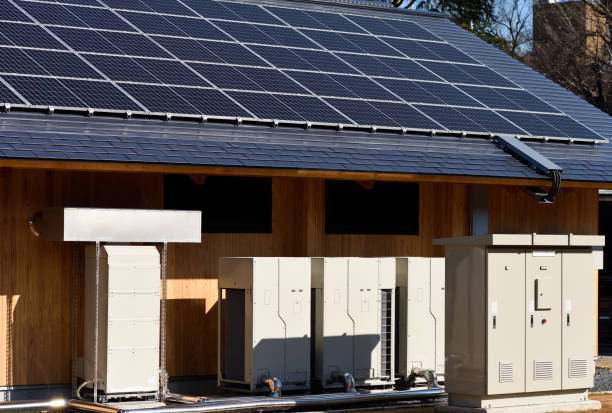
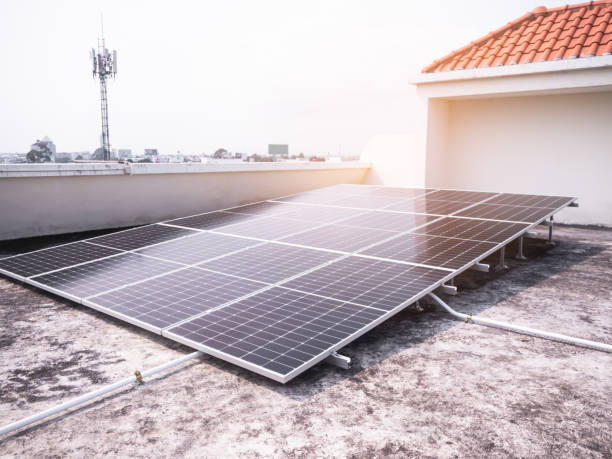 | Solar Rooftop Ongrid System A Solar Rooftop Ongrid System is an efficient, eco-friendly solution that converts sunlight into electricity. View product → |
 | Solar Offgrid System A Solar Offgrid System is an independent energy solution that operates without relying on the main power grid. View product → |
Frequently asked questions
How do I calculate my home’s solar energy target?
Add the kWh readings from your last 12 electricity bills, divide by 12 for average monthly use, and divide by 365 for average daily consumption. Check your highest-use months separately.
How do I size a solar inverter for my appliances?
List each appliance’s running watts, startup watts, and expected operating time. Size the inverter for appliances that may run at the same time, including motor startup demand.
How do roof conditions affect solar panel output?
Usable roof area, shading, orientation, tilt, temperature, and local sunlight determine how much electricity your panels can produce. Remove shaded sections from your production estimate.
How do I choose a battery size for home backup?
List essential backup loads, add their wattage, and multiply by the hours you need them to run. Include inverter losses and reserve capacity when comparing battery options.
What should I check before exporting solar power to the grid?
Confirm your utility’s export limit, meter requirements, interconnection application, approved inverter list, and inspection process before finalising the system design.
Related product
 | Solar Product The Solar Homelight System provides an eco-friendly, cost-effective lighting solution for homes. View product → |