A successful rooftop installation depends on more than fitting panels onto an open roof. You need to confirm that the roof can support the array, size the system from a full year of electricity use, compare complete quotations, coordinate utility approval, and document the work before paying the final invoice.
Key takeaways
- Check roof structure, remaining life, shade, orientation, and pitch before seeking quotes.
- Size panels against annual electricity use, not available roof area alone.
- Compare equipment, warranties, approvals, installation scope, and predicted generation line by line.
- Keep commissioning records, safety test results, warranties, and utility approval documents.
Confirm That Your Roof Is Suitable Before You Request a Final Quote
A roof can hold panels safely only when its structure, remaining service life, and layout have all been checked. Productive output also depends on roof orientation, pitch, shade, and the electricity distribution company’s interconnection limits—not total roof size alone.
- Arrange a roof inspection. Check cracked concrete slabs, corrosion, damaged rafters, lightweight roofing, leaks, and the roof’s remaining service life. If replacement is due soon, complete it before installation; removing and reinstalling an array costs more than the module price.
- Mark the usable roof area after excluding setbacks, row spacing, parapets, water tanks, skylights, vents, walkways, cable routes, inverter space, and access for future repairs. Ask for the proposed layout, not just a panel count.
- Record roof orientation and pitch, then map shade from trees, buildings, chimneys, and tanks at morning, midday, afternoon, and winter sun angles. A midday photograph can hide seasonal losses.
- Obtain a structural check for cracked slabs, lightweight roofs, corrosion, or unusual added loads. Racking must match local wind and snow loads, roof exposure, building height, edge zones, attachment spacing, and rail spans.
- Confirm interconnection rules before accepting a final design. Ask whether export limits, non-export controls, inverter grid-support settings, battery operating modes, or rapid-shutdown equipment apply.
A larger panel capacity than inverter capacity can be deliberate, but the designer must explain clipping and the selected DC/AC ratio. Reject a quote that assumes every square metre is available or postpones structural and utility approval.
Size the System and Choose the Right Power Architecture
Start with your 12 months of kWh consumption, then split it into daytime versus nighttime use. Size the array against modeled annual production after orientation, pitch, temperature, wiring, inverter, and shade losses—not against roof area or a single sunny day.
A time-dependent shade study should show morning, afternoon, and winter losses; a midday photograph can hide substantial seasonal solar generation losses.
Before selecting equipment, establish:
- The annual kWh target and the monthly production shortfall you will accept.
- The roof area remaining after setbacks, row spacing, walkways, equipment access, and future repairs.
- The backup loads, including refrigerators, lights, fans, pumps, HVAC, and other motor-starting equipment.
| Option | What it means | When it applies |
|---|---|---|
| On-grid | Solar serves the home and excess exports through the utility meter; the grid supplies shortages. | Choose it when the grid is reliable and backup power is not essential. |
| Off-grid | Solar, batteries, and usually a backup generator operate without utility supply. | Choose it only when grid connection is unavailable or uneconomic; size for several low-sun days. |
| Hybrid | Solar and batteries serve selected loads or the whole home, with grid support and controlled charging. | Choose it when you need backup or want to limit exports. |
| No rooftop system | You avoid installation and use grid power or another site-based option. | Choose it when shade, roof condition, structural work, low consumption, or approval limits defeat the economics. |
Confirm interconnection rules before finalizing inverter size or battery modes. The utility may impose export limits, require non-export controls, or specify IEEE 1547 grid-support settings. Module-level electronics reduce mismatch but cannot restore sunlight blocked by shade. Compare batteries using usable kWh, continuous and peak kW, duration, efficiency, and end-of-warranty capacity—not nameplate kWh.
Compare Quotations and Verify Maharashtra Utility Requirements
A credible quotation names the PV modules and inverter type, rated capacity, DC/AC ratio, mounting method, cable sizes, workmanship warranty, expected commissioning date, and tax. It also itemises the DC isolator and AC protection, surge protection and earthing, monitoring equipment, testing, transport, scaffolding, and removal of packaging.
Ask the installer to mark each cost as included, excluded, or assigned to you. Madhuri Solar, like any installer you compare, should state whether roof repairs, structural strengthening, repainting, meter changes, utility charges, extra cable runs, and future removal for roof work are outside the price.
- You provide ownership or occupancy proof, the latest electricity bill, access to the premises, and approvals from a housing society or landlord where applicable.
- The installer prepares the design, single-line diagram, equipment data sheets, safety test records, and net-metering application documents Maharashtra’s distribution company requests.
- The electricity distribution company reviews interconnection, approves export settings, inspects when required, and replaces or reconfigures the meter. It—not the installer—controls that approval and the billing change.
| Check | What the quotation must say | Who controls it |
|---|---|---|
| Equipment | Module model, inverter type, warranties, protection devices | Installer |
| Price | Taxes, exclusions, roof-repair and meter-work charges | You and installer |
| Grid connection | Application work, inspection, meter fee, approval conditions | Distribution company |
| Future cost | Inverter replacement access, labour, warranty transfer | You |
Do not compare only the first price: include inverter replacement, access or crane costs, firmware support, and warranty-transfer conditions over the system’s life. Verify the current checklist with your Maharashtra DISCOM before signing.
Related product
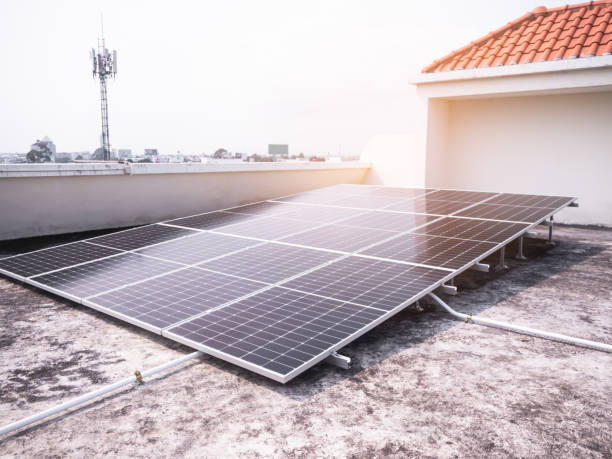 | Solar Rooftop Ongrid System A Solar Rooftop Ongrid System is an efficient, eco-friendly solution that converts sunlight into electricity. View product → |
Manage Installation Day, Safety Checks, and Commissioning Evidence
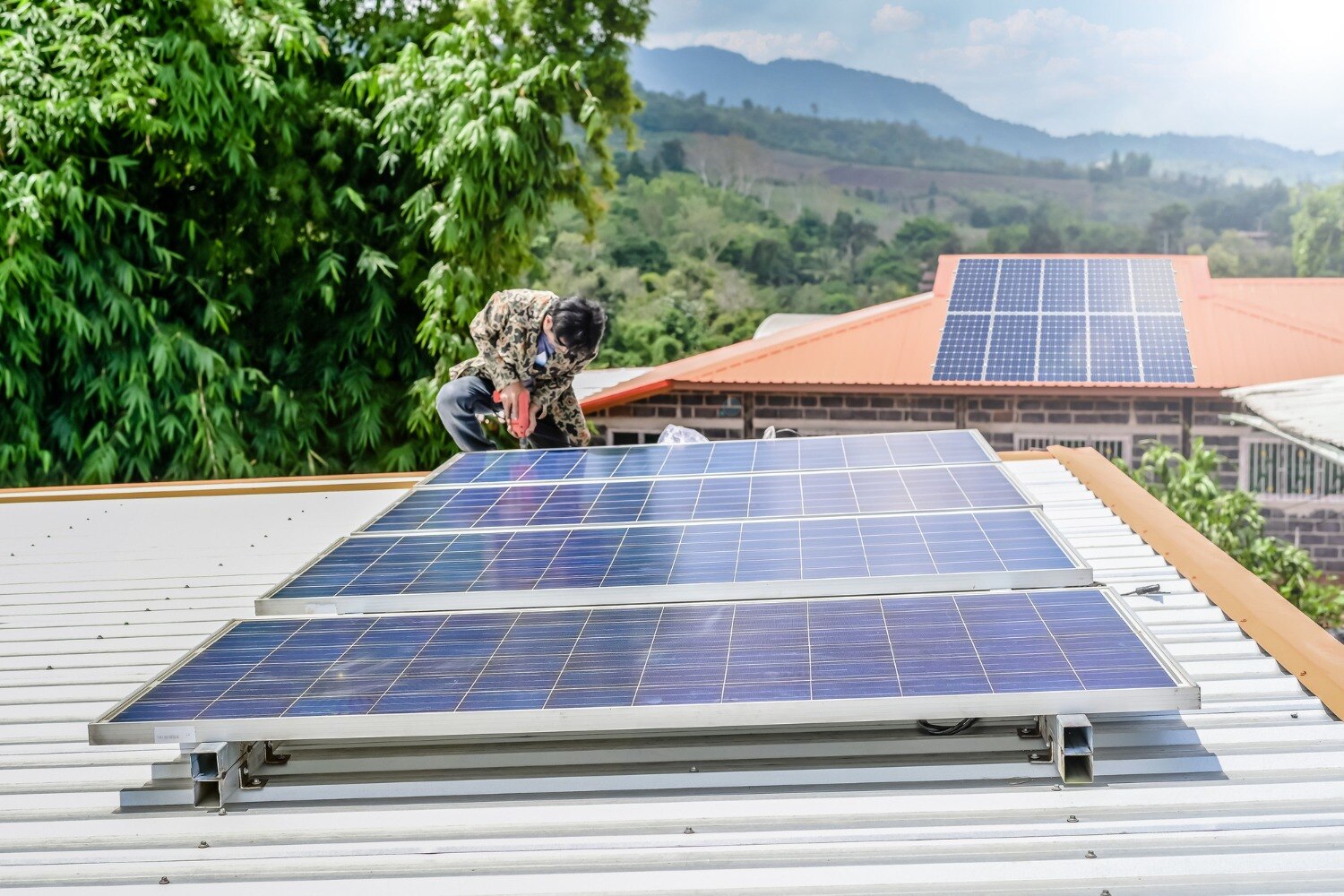
Before unloading, match the modules, inverter, mounting structure, and serial numbers to the approved quotation. Reject damaged cartons, photograph dents or exposed connectors, and record the delivery date. Keep equipment dry and off the roof until the installer confirms the roof is ready.
- Mounting: verify rail positions, roof attachments, torque markings, edge clearances, and a continuous bonding path. Do not mix rails, clamps, splice hardware, or grounding parts from unrelated systems.
- Waterproofing and drainage: inspect every roof penetration, flashing, seal, and cable entry. Fasteners that block a gutter or leave a torn membrane can cause leaks after the first heavy rain.
- Wiring: check that MC4 connectors and DC wiring are fully seated, correctly polarised, supported against abrasion, and routed away from sharp edges and standing water. Do not leave loose connectors on the roof.
- Testing: require polarity, continuity, insulation-resistance, open-circuit-voltage, and inverter-startup checks before energisation. A failed reading must be corrected, not covered by repeating the test.
- Meter work: confirm the distribution company’s inspection, bidirectional meter installation, export setting, and written approval before relying on grid-credit calculations.
- Commissioning: obtain the final single-line diagram and commissioning tests, including array voltages, inverter settings, protection checks, monitoring setup, and shutdown procedure.
Do not sign completion from a phone app alone. Keep photographs of concealed wiring and roof penetrations, test results, equipment serial numbers, the approved drawings, meter details, and the date the system was placed into service. Ask who will correct a failed utility inspection.
Plan Maintenance, Handover, and the System’s Long-Term Fit
Keep a maintenance file from commissioning onward. Record the installation date, equipment serial numbers, approved drawings, test results, invoices, and electricity bills. Give the installer written notice of faults; do not rely on a phone call.
- Inspect modules, mounting hardware, cable routes, and roof penetrations after severe weather.
- Schedule module cleaning and bird droppings removal when deposits shade cells or reduce output; use soft water and non-abrasive tools.
- Perform inverter fault checks by reading the display or monitoring portal, recording error codes, and checking whether production stopped or only communications failed.
- Obtain monitoring access in your own name, including administrator credentials, historical data, and alert settings.
- Confirm module and inverter warranties, their end dates, exclusions, claim process, labour coverage, and transfer conditions.
- Put roof-leak liability in writing: identify who repairs leaks caused by mounting work, for how long, and whether removal and reinstallation are included.
Compare lifecycle choices before approving repairs or upgrades.
| Option | Main cost or risk | Choose it when |
|---|---|---|
| Keep the array | Cleaning, service, and eventual inverter replacement | Roof and production remain sound |
| Add a battery | Battery, controls, and replacement planning | Backup or export limits justify the cost |
| Remove and reinstall | Labour, access equipment, and lost generation | Roof replacement is due |
| Replace the system | New equipment and disposal | Failures, shading, or changed electricity use undermine the design |
Model about 0.5% annual module degradation, but treat it as an assumption, not guaranteed production. Include inverter replacement, labour, access costs, firmware support, and warranty transfer terms; a low purchase price can become expensive over its life.
Frequently asked questions
How do I know whether my roof is suitable for solar panels?
Check the roof’s structural condition, remaining service life, orientation, pitch, shading, access, and available installation area before requesting a final quote.
How should I size a rooftop solar system for my home?
Use your electricity consumption, roof conditions, shading, desired offset, inverter limits, and the distribution company’s interconnection limit rather than roof size alone.
What should I compare in rooftop solar quotations in Maharashtra?
Compare panel and inverter specifications, mounting hardware, warranties, generation estimates, inclusions, exclusions, installation work, approvals, and Maharashtra utility interconnection requirements.
What records should I keep after rooftop solar installation?
Keep commissioning evidence, safety-check results, equipment serial numbers, warranties, manuals, utility approval records, as-built details, and maintenance instructions.