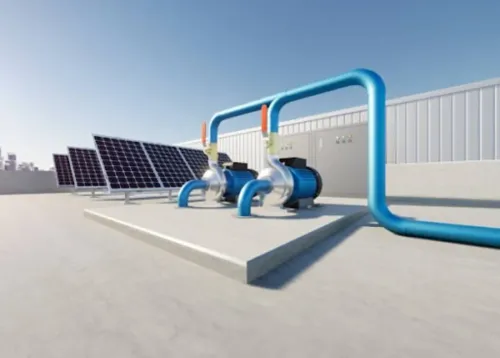
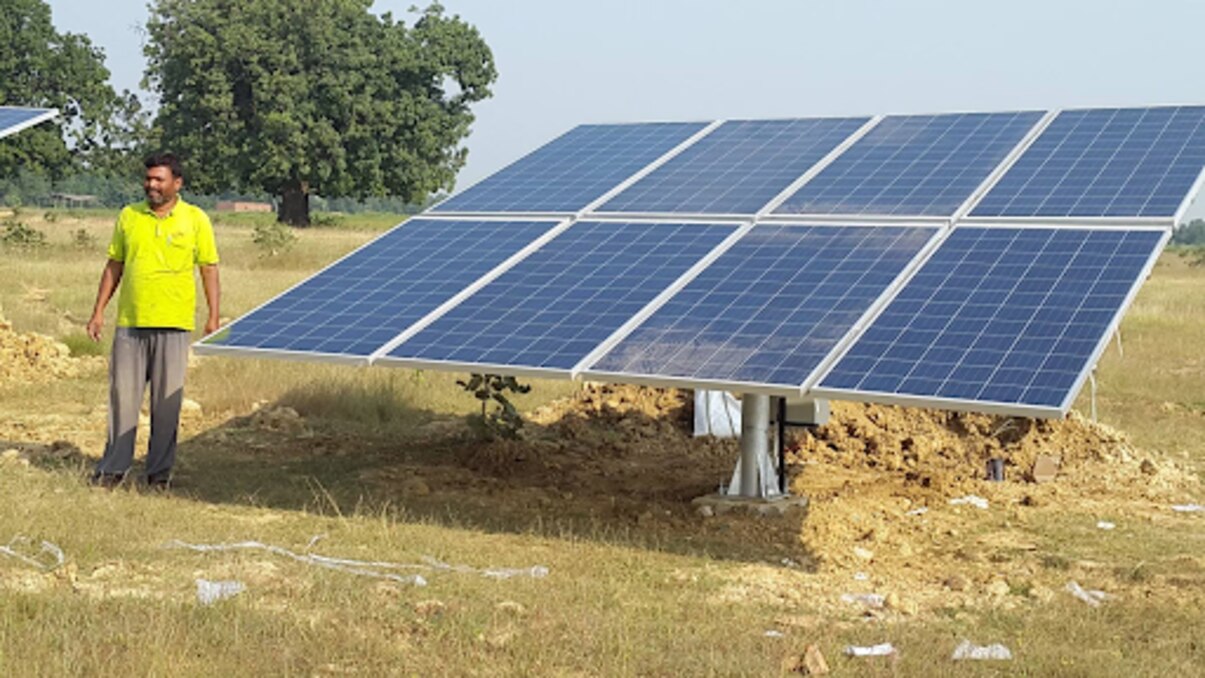
A credible solar company must do more than supply panels: it must design a workable system, manage approvals, install it safely, and support it after commissioning. By checking the company, proposal, contract, and handover evidence in a fixed order, you can compare providers on technical fit and total responsibility instead of headline price.
Key takeaways
- Confirm who handles surveying, design, installation, commissioning, and service.
- Ask for installer credentials and a technical design for your site.
- Check the energy forecast, system type, approvals, and grid-connection process.
- Compare the complete price, warranty terms, contract duties, and after-sales support.
Confirm the Company Can Take Responsibility for the Full Project
A qualified solar company accepts responsibility from feasibility to service, not just panel delivery. Before signing, use solar company verification to confirm who will survey, design, build, commission, and support the system.
1. Check the company’s legal business name, registered address, GST details, years of operation, local installation team, and financial stability. Ask who remains responsible if a subcontractor disappears. For a load assessment India Maharashtra project, the company should review electricity bills, roof or site access, property records, and utility documents before pricing the work.
2. Require a written scope covering the site survey, electricity-load assessment, system design, roof or ground structural review, permits, utility coordination, installation, commissioning, and after-sales service. State who supplies approval signatures, coordinates with other construction work, submits utility applications, and pays each milestone. Include objective completion tests and punch-list closure.
3. Treat these as warning signs: a quote issued without a site visit, pressure for full upfront payment, vague equipment descriptions, or guaranteed savings without assumptions. Reject promises to “arrange approvals” unless the contract names the application, authority, inspection, payment responsibility, and consequences of delay or rejection.
Provide timely access, accurate bills and property records, signed approvals, construction coordination, and agreed milestone payments. A company that cannot explain these dependencies before contract signing is not taking full project responsibility.
Demand Proof of Installer Skill and a Comparable Technical Design
1. Ask for the names and solar installer qualifications of the people responsible for system design, electrical work, structural review, and commissioning. A sales engineer’s claim is not evidence of competence.
2. Request completed projects matching your system size, roof type, application, and connection type. Contact the owners, inspect dated photographs of cable routing and mounting, and ask whether you can visit an operating site.
3. Require a design pack before comparing prices. It must include a single-line diagram, solar panel datasheet, inverter datasheet, battery specifications, generation estimate, shadow analysis, roof-load assessment, protection-device schedule, and itemised bill of materials. For a roof, confirm the remaining roof life; otherwise module removal and reinstallation can become your cost.
4. Compare bids inside one system boundary. Match module wattage and technology, DC capacity, inverter brand and AC capacity, DC/AC ratio, interconnection limit, usable battery energy, auxiliary loads, mounting steel, cable sizes, earthing, lightning and surge protection, monitoring, labour, taxes, foundations, civil work, switchgear, controls, communications, permits, utility studies, and commissioning.
Different inclusions create apparent price differences.
5. Treat a Tier 1 label and IEC 61215 IEC 61730 references as limited evidence: IEC 61215 addresses module design qualification, while IEC 61730 addresses safety, not site suitability, installer quality, or annual yield. In the United States, verify NRTL listings, including UL 61730 where applicable, for modules, inverters, rapid-shutdown equipment, and other covered equipment.
Reject “UL compliant” without a listing number.
Test the Energy Forecast, System Type, and Approval Path
Challenge the solar generation estimate by demanding the production model, not a single annual kWh figure. Check roof orientation, tilt, usable area, and shading by season and time of day against local solar-resource data, the weather-data source and period, and plane-of-array irradiance.
Ask for a P50 P90 solar forecast, showing the central P50 case and downside P90 case where financing requires it. The model must identify temperature effects, soiling, wiring, mismatch, inverter efficiency, clipping, availability, curtailment, degradation, and bifacial gain.
It must also state first-year losses from light-induced degradation, LeTID, and potential-induced degradation; 0.5% annual degradation is a planning assumption for crystalline-silicon PV, not a guarantee.
- Compare on-grid, off-grid, and hybrid solar designs by outage behaviour, export limits, auxiliary loads, and battery capacity for nighttime and backup loads.
- For net metering Maharashtra, identify the point of interconnection, export limit, utility application, inspection, meter change, commissioning, utility study, telemetry, and network-upgrade responsibility.
- Put in writing who pays if approval is delayed, export capacity is reduced, permission to operate is withheld, or the application is rejected.
Verify subsidy eligibility through the responsible government portal or authority using ownership records and electricity bills. Treat subsidy processing as a separate approval process, not an installer promise. Reject any forecast that hides losses, assumes unapproved export, or omits the interconnection path.
Price the Complete Obligation, Then Read the Warranty and Contract
A low quote is useful only after you price the solar installation hidden costs. Add roof repairs, extra mounting steel, longer cable routes, earthing, lightning protection, meter changes, batteries, scaffolding, transport, civil work, permissions, monitoring subscriptions, annual maintenance, and module removal and reinstallation when the roof is replaced.
- Use this solar contract checklist: define included and excluded work; tie milestone payments to evidence; cap the deposit; state delivery and commissioning dates; define commissioning and acceptance tests; set cancellation rights, delay remedies, retainage, equipment ownership, change-order approval, dispute resolution, failed-inspection responsibility, liquidated damages, and performance security.
- Compare the installed system on one boundary: module capacity, inverter capacity and clipping, usable storage, interconnection limit, switchgear, communications, foundations, utility studies, permits, and civil work. Record who pays each omission.
- Require a solar warranty comparison. Separate module product defects from power-performance coverage, then check duration, degradation formula, minimum warranted power, exclusions, claim deadline, governing law, assignability, labour, freight, replacement logistics, and responsibility if the manufacturer or installer closes. Include roof-life assumptions in writing.
| Module warranty | Product defects and minimum power | Check exclusions and degradation formula |
|---|---|---|
| Inverter warranty | Controls, MPPT range, temperature derating, firmware, communications | Confirm remote-access control, replacement lead time, shipping, commissioning, and field labour |
| Battery warranty | Battery warranty cycles or throughput limits | Confirm usable-capacity threshold and replacement process |
| Workmanship warranty | Installation defects and roof penetrations | Identify coverage period and who performs repairs |
Require insulation-resistance, polarity, grounding, bonding, protective-device, inverter, communications, and meter-validation tests before final payment. Define monitoring uptime, alarm response, and punch-list closure.
Inspect the Finished System and Score the Provider for Long-Term Fit
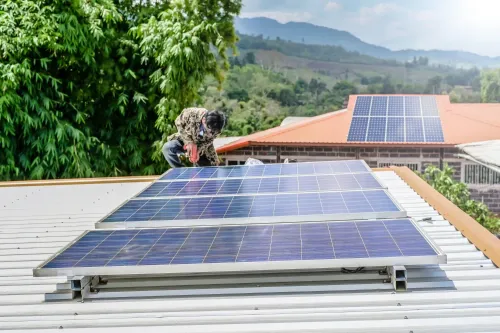
Do not accept the system on appearance alone. Use a solar installation inspection checklist: verify panel alignment, roof penetrations and waterproofing, cable support, connector compatibility, DC and AC isolators, earthing continuity, labels, surge protection, inverter settings, monitoring access, and every installed item against the approved bill of materials. Reject unresolved defects before final payment.
1. Require documented commissioning tests: insulation resistance, polarity, grounding and bonding, protective-device settings, inverter operation, rapid-shutdown operation where applicable, communications, and meter validation. Define punch-list closure, failed-inspection responsibility, retainage, and change-order authority in the contract.
2. Take an owner-controlled data package containing module and inverter serial numbers, firmware versions, test records, as-built drawings, single-line diagrams, settings files, geospatial layout, and warranty registrations. These solar commissioning documents preserve traceability when a warranty claim or fault occurs.
3. Put solar after-sales service into measurable terms: monitoring uptime, data retention, alarm-response and site-response times, preventive-maintenance frequency, cleaning and vegetation responsibility, spare-parts availability, thermography or IV-curve testing, reporting format, and escalation if the installer closes. Check inverter MPPT range, temperature derating, remote-access controls, firmware ownership, replacement lead time, and field-labour coverage.
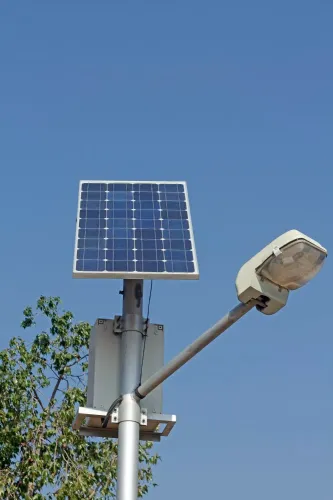
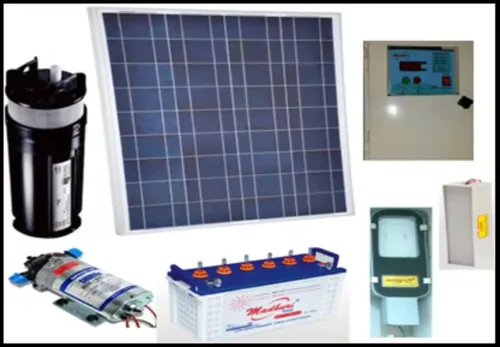
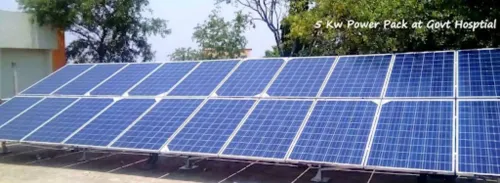
Score each bidder from 1 to 5 on technical fit, documents, total installed cost, timeline, warranty ownership, service capacity, and approval risk in a solar company comparison worksheet. Match skills to the application: a rooftop, farm pump, public light, surveillance system, and pumping project have different maintenance demands.
In Pune or Maharashtra, compare Madhuri Solar on this evidence, not product range. Redesign or reject a shaded or weak roof, unreliable water source, undersized night battery, or payback dependent on unapproved export or subsidy.
Related products
 | Solar Product The Solar Homelight System provides an eco-friendly, cost-effective lighting solution for homes. View product → |
 | Solar Rooftop Ongrid System A Solar Rooftop Ongrid System is an efficient, eco-friendly solution that converts sunlight into electricity. View product → |
Frequently asked questions
What should a solar company take responsibility for?
Confirm that one accountable provider covers feasibility, site surveying, system design, procurement, installation, commissioning, approvals, and post-installation service.
How can you verify a solar installer’s skill?
Request installer credentials, evidence of comparable completed projects, named technical staff, and a site-specific design showing equipment, capacity, layout, protections, and installation details.
What should you check in a solar energy forecast?
Check the assumptions behind predicted generation, including site location, shading, roof orientation, panel tilt, system losses, equipment ratings, and expected seasonal output.
Which costs should a solar quotation include?
Compare panels, inverters, mounting structures, cabling, protection equipment, engineering, permits, transport, installation, commissioning, monitoring, taxes, maintenance, and removal or replacement obligations.
What should you inspect after solar installation?
Check panel alignment, mounting security, cable routing, earthing, labels, inverter operation, monitoring access, commissioning records, warranty documents, and the procedure for reporting faults.
Related products
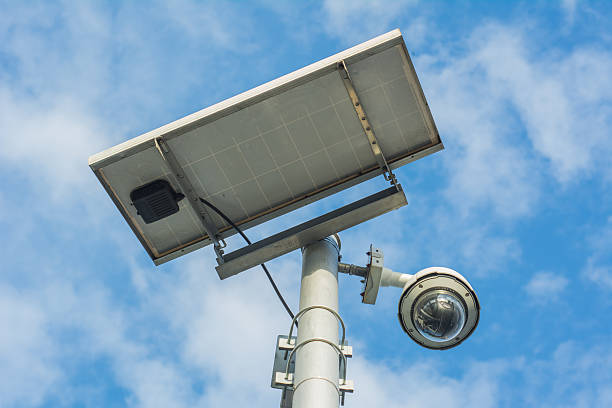 | Solar Camera Our Solar Camera offers reliable, eco-friendly surveillance powered by solar energy. View product → |
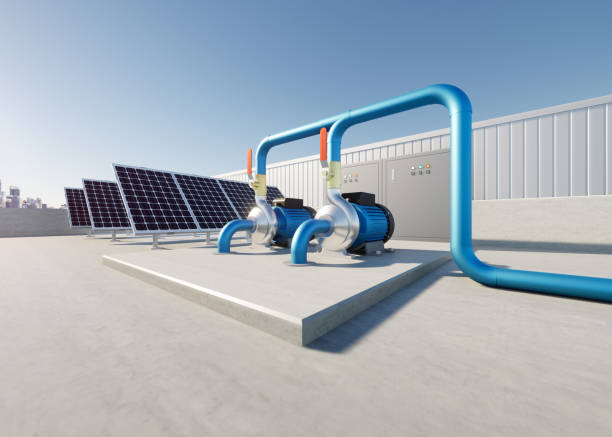 | Solar Pumping System A Solar Pumping System is an eco-friendly solution that harnesses solar energy to power water pumps for irrigation, livestock, and domestic use. View product → |
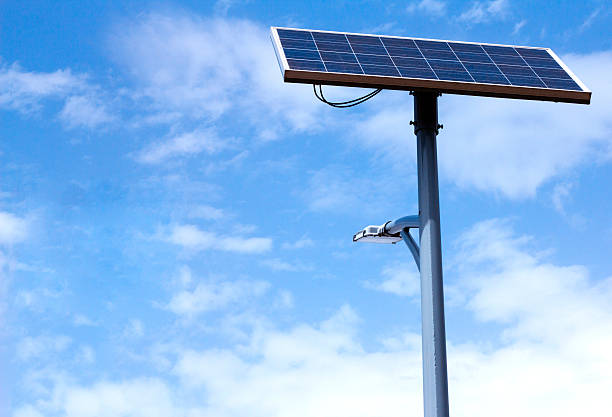 | Streetlight System ₹150000 The Solar Streetlight System offers an eco-friendly and cost-effective lighting solution, powered by solar energy. View product → |
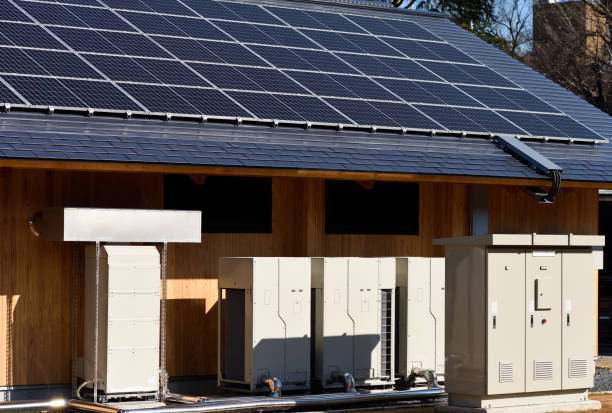 | Solar Offgrid System A Solar Offgrid System is an independent energy solution that operates without relying on the main power grid. View product → |