The right system depends on more than roof area: utility reliability, appliance demand, battery autonomy, shading, seasonal sunlight, and local interconnection rules all change the design. By comparing those factors, you can identify whether a grid-tied, off-grid, or hybrid installation fits your home and understand what the installer must verify before commissioning.
Key takeaways
- Choose on-grid solar for utility-connected homes needing lower-cost daytime generation.
- Choose off-grid solar only when panels and batteries cover every critical load.
- Size batteries from overnight energy use and required backup autonomy.
- Use a hybrid inverter and dedicated backup circuits for outage protection.
On-Grid and Off-Grid Solar: What Changes Inside the Home?
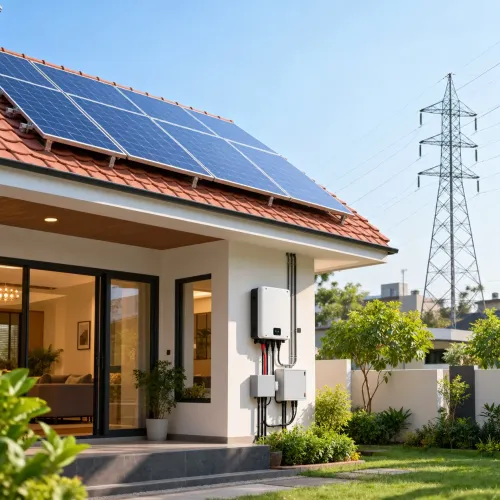
An on-grid solar system stays connected to the utility; an off-grid solar system must produce and store enough electricity for the home without it.
| Option | On-grid system | Off-grid system |
|---|---|---|
| Grid dependence | Uses the utility when solar output is low; export may require an interconnection agreement or zero-export controls. | Has no utility supply, so every load depends on solar, batteries, or a generator. |
| Battery requirement | Not required for ordinary bill reduction; add a solar battery for backup or energy shifting. | Essential for night-time use and cloudy periods. |
| Outage behaviour | Standard grid-tied inverters shut down during an outage. Backup power for home needs batteries, a hybrid inverter, and safe isolation equipment. | Keeps selected or whole-home circuits running if storage and generation are sufficient. |
| Usable energy | Solar serves daytime loads; surplus may export. Battery energy is less than its nameplate capacity. | PV and batteries must cover night use, peak loads, losses, and consecutive low-sun days. |
| Components | PV modules, grid-tied inverter, mounting, protection, metering, and utility connection. | PV modules, charge controller or hybrid inverter, battery bank, protection, monitoring, and often a generator. |
| Complexity and maintenance | Simpler installation and battery-free systems have fewer components to service. | More design and maintenance: battery checks, generator fuel and servicing, and load management. |
A battery’s usable capacity falls with permitted depth of discharge, temperature limits, inverter losses, reserve charge, and ageing. Specify usable kWh, not only nominal kWh.
AC-coupled storage is easier to add later; DC-coupled storage can reduce conversion losses but demands more controls and commissioning. Off-grid design also needs generator-start settings and minimum loading, not merely a generator’s kW rating.
Which System Fits Your Property and Power Needs?
Choose on-grid solar if your utility service is dependable, your property has a grid connection, and your priority is reducing electricity bills rather than maintaining power during outages. Choose off-grid solar only when the site is remote, grid extension is impractical, or outages make uninterrupted supply more valuable than lower complexity.
| Option | Best fit | Main decision point |
|---|---|---|
| On-grid solar | Reliable utility service and daytime consumption | Check export limits, tariffs, fixed charges, and net metering Maharashtra rules |
| Off-grid solar | No grid connection or frequent, prolonged outages | Fund enough panels, usable battery capacity, inverter surge power, and backup generation for poor-sun periods |
| Hybrid solar system | Grid-connected home needing solar power during outages | Define backed-up circuits, isolation equipment, battery size, and motor-starting loads |
A conventional grid-tied inverter shuts down when utility voltage disappears. Solar panels alone will not keep the home running; a hybrid inverter, battery, and approved transfer or isolation equipment must form a safe local supply.
On-grid export may be capped even when the array could produce more. A zero-export controller must respond safely to sensor failure, communication loss, and sudden load changes. Confirm the interconnection agreement before comparing savings, because export rates and limits can change the result.
For off-grid properties, size for the worst solar season and consecutive cloudy days, not annual average use. Large pumps, compressors, and well motors need inverter surge capacity beyond their running wattage.
How to Size the Panels and Battery Bank
Start with the lowest-sunlight month, not your annual average. Divide monthly consumption by 30 to find daily kWh, then estimate PV capacity as daily kWh ÷ local peak-sun hours ÷ total system efficiency. Include inverter, wiring, temperature, dust, and battery losses; a solar system size calculator is useful only when these inputs are realistic.
1. Record peak demand separately from energy use. Add the running watts of appliances used together, then check starting surges from pumps, refrigerators, and air conditioners. The inverter must handle both continuous and surge loads; extra panels do not correct an undersized inverter.
2. Inspect the roof’s usable area, orientation, tilt, structural condition, and shade by hour and season. A shaded string can lose far more than the shaded module alone, so compare separate MPPT inputs, module-level electronics, or string redesign before adding wattage. Remove obstructions where practical.
3. For on-grid PV array sizing, divide daily consumption by the site’s worst-month sun hours and apply a 20–30% allowance for system losses. Confirm roof space, inverter limits, and export restrictions rather than selecting panels from roof area alone.
4. For off-grid battery sizing, multiply daily load by required autonomy days, then divide by permitted depth of discharge and battery, inverter, and wiring efficiency. Add reserve capacity for cold temperatures, ageing, and essential-load priorities; nameplate kWh is not usable household energy.
5. Size the array to recharge that battery after cloudy periods while serving daytime loads. If rare prolonged storms make PV and batteries uneconomical, include a generator with suitable charger capacity, automatic start controls, fuel storage, and maintenance.
Inverters, Outages, Starting Loads, and Backup Circuits
An on-grid inverter converts solar DC to grid-synchronised AC and stops supplying the house when utility voltage or frequency disappears. Anti-islanding protection prevents it from energising lines that workers believe are dead.
| Option | What it controls | Outage behaviour |
|---|---|---|
| On-grid inverter | PV output and grid synchronisation | Shuts down; sunlight alone cannot power the home |
| Off-grid inverter | A stable local AC supply from panels and batteries | Forms its own island and manages battery charging and loads |
| Hybrid inverter | PV, battery, grid, and selected backup circuits | Transfers approved circuits to battery power after isolating the grid |
Backup requires isolation equipment, such as a transfer switch or backup gateway, that blocks utility backfeed. A grid-connected battery does not automatically provide whole-home backup.
Ask the installer to rate both continuous output and short-duration surge capacity. Starting a pump, refrigerator compressor, air-conditioner, or well motor can demand several times its running wattage; an inverter that passes normal operation can still trip at startup.
- Identify the circuits that remain energised: refrigerator, lights, communications, or selected sockets.
- Exclude high-demand circuits unless the inverter and battery support them: electric geyser, oven, large air-conditioner, or workshop machinery.
- Confirm the battery’s usable kWh after depth-of-discharge limits, reserve charge, temperature limits, conversion losses, and ageing.
AC-coupled batteries suit many existing PV systems because they use a separate battery inverter. DC-coupled batteries reduce conversion stages and capture some otherwise clipped solar energy, but their controls and commissioning are more complex.
What the Installation and Commissioning Process Must Include
A sound solar installation process starts with measured demand, not roof area. Record monthly kWh, appliance running and starting loads, backed-up circuits, outage patterns, and the worst solar period. Off-grid sizing must include consecutive cloudy days, battery usable capacity, inverter losses, charge limits, and generator availability.
1. Inspect the roof for structure, corrosion, waterproofing, access, orientation, tilt, and cable routes. Map shadows from parapets, tanks, trees, and nearby buildings at different times of day and seasons.
2. Approve a single-line diagram showing modules, string voltages, isolators, inverter, battery, meter, backup circuits, transfer equipment, earthing conductors, and protection devices. Confirm that the inverter’s continuous and surge ratings start motors, pumps, and compressors.
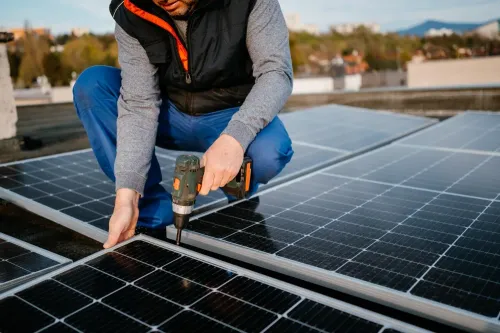
3. Install correctly rated cables, connectors, conduit, labels, and weatherproof junctions. Specify DC AC protection, including DC fuses or breakers, AC breakers, surge-protection devices, and accessible isolation points.
4. Test solar earthing, equipment bonding, polarity, insulation resistance, string voltage, and continuity before energising. Record the results rather than relying on a visual check.
5. Commission the inverter with the approved grid profile, anti-islanding, voltage and frequency limits, export or zero-export controls, battery reserve, and charge limits. Check behaviour after sensor loss or communications failure.
6. Enclose batteries against unauthorised access, follow the manufacturer’s clearances and temperature limits, verify the battery-management system, and provide safe isolation. Whether you use Madhuri Solar or another installer, require these test records and settings in the handover pack.
7. Complete utility interconnection India requirements through the Maharashtra DISCOM, including application, sanctioned-load review, inspection, agreement, and bidirectional-meter or export-control approval before parallel operation.
Related products
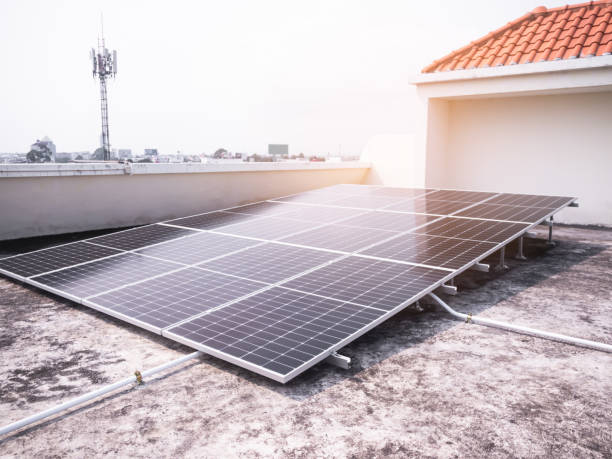 | Solar Rooftop Ongrid System A Solar Rooftop Ongrid System is an efficient, eco-friendly solution that converts sunlight into electricity. View product → |
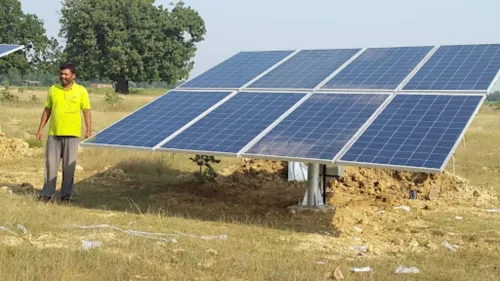
 | Solar Offgrid System A Solar Offgrid System is an independent energy solution that operates without relying on the main power grid. View product → |
Frequently asked questions
What is the difference between on-grid and off-grid solar at home?
An on-grid system remains connected to the utility and usually does not power the home during an outage. An off-grid system operates independently and needs enough solar generation, battery storage, and inverter capacity for the home's loads.
How do you choose between an on-grid and off-grid solar system?
Choose on-grid when your property has a reliable utility connection and you want to reduce grid electricity use. Choose off-grid when grid service is unavailable or independence matters enough to justify larger panels, batteries, and backup equipment.
How do you size solar panels and a battery bank for a home?
Add daily energy use in kilowatt-hours, account for local solar production and system losses when sizing panels, then size the battery from overnight use, critical loads, and the number of backup days required.
Will solar panels keep a home running during a power outage?
Standard on-grid systems shut down during an outage for safety. A battery system with a suitable hybrid inverter, transfer equipment, and dedicated backup circuits can keep selected loads operating.
What should home solar installation and commissioning include?
The process should include a load assessment, roof and electrical checks, equipment selection, permits, safe mounting and wiring, inverter configuration, utility coordination where required, testing, monitoring setup, and handover documents.