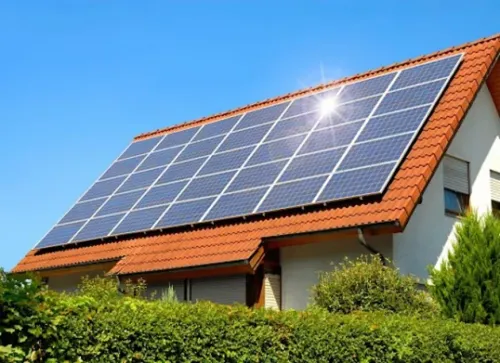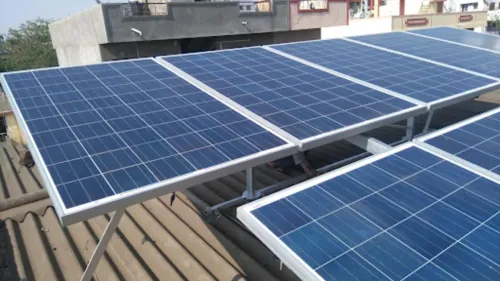
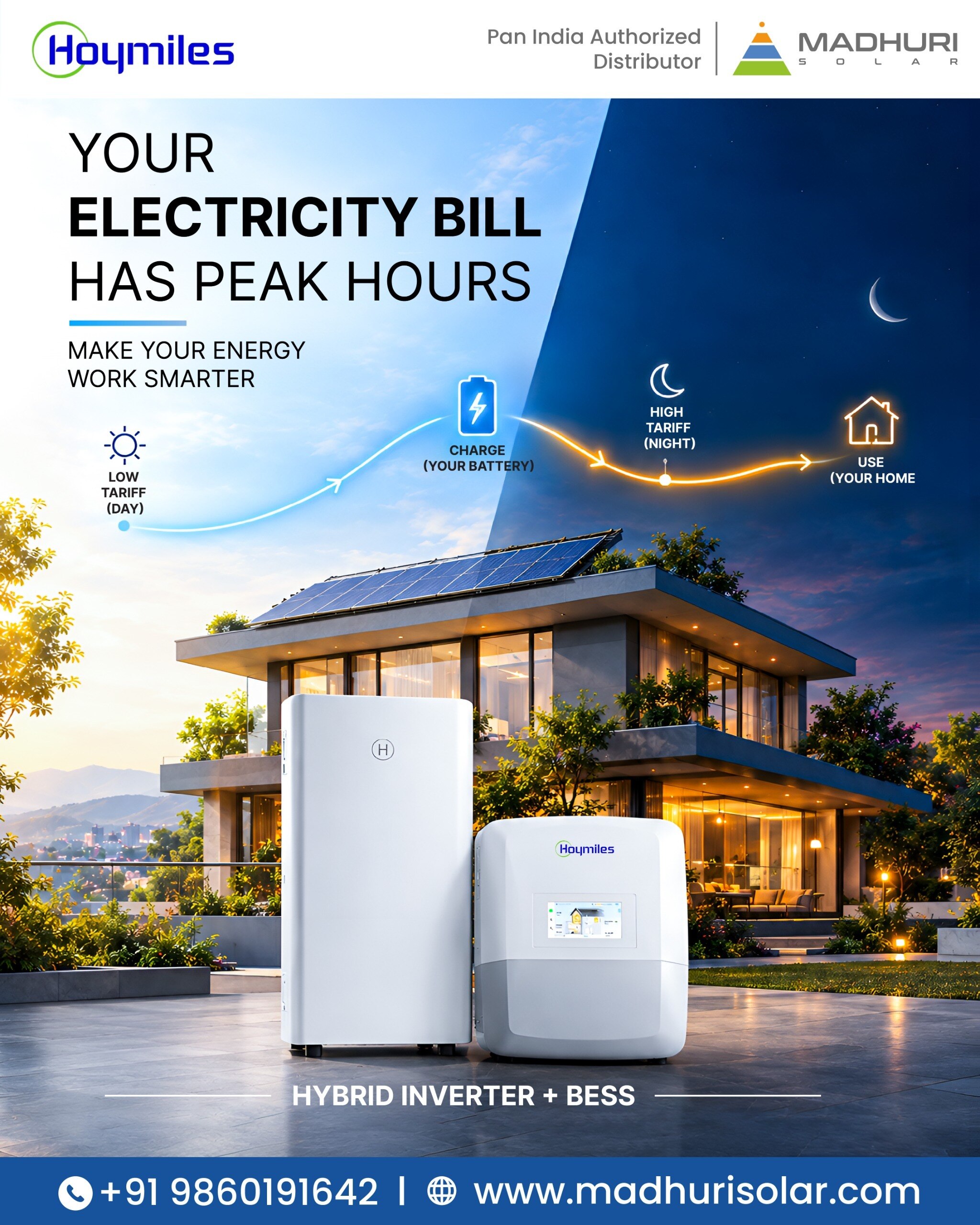
Solar panels produce the most electricity during daylight, while many sites use the most power after sunset. A battery energy storage system shifts that electricity across the day, protects selected loads during interruptions, and controls when power comes from solar, the battery, the grid, or a generator. By the end, you will know how to compare battery capacity, inverter power, efficiency, chemistry, degradation, controls, and installation requirements.
Key takeaways
- Size battery capacity from usable kilowatt-hours, not nameplate capacity.
- Match inverter power to peak loads, charging rate and backup requirements.
- Compare coupling architecture, round-trip efficiency and control settings before installation.
- Verify chemistry, warranty limits, thermal protection and battery-management records.
How the battery system moves solar electricity through the day
A battery energy storage system stores electricity electrochemically in battery cells; the solar panels do not store it. The battery-management system monitors cell voltage, temperature, current and state of charge, while protection equipment disconnects the circuit during faults.
A bidirectional inverter converts DC electricity to AC for site loads or the grid, then converts AC back to DC when charging. The energy-management system selects the operating path from live site conditions and programmed limits.
- During daylight, solar electricity passes through the inverter to serve running loads first. Using solar directly avoids an unnecessary battery cycle.
- When solar production exceeds the live load, the energy-management system sends the surplus to the battery. It stops or limits charging when the programmed upper state-of-charge limit is reached.
- If the battery is full, remaining surplus can flow to the grid under the site’s interconnection agreement. That export is not stored energy.
- As sunlight weakens or evening demand rises, the battery-management system confirms that the battery is within safe limits and the inverter supplies AC power to the loads.
- When solar and battery output cannot cover demand, the energy-management system draws the balance from the grid or starts the generator. It preserves any configured backup reserve instead of discharging the battery completely.
In an AC-coupled system, separate inverters handle the PV array and battery. In a DC-coupled system, the PV array and battery share a bidirectional inverter, reducing conversion steps but tying their control to the shared power-conversion equipment.
How to size battery energy and inverter power
Size energy from the required load during the backup or discharge window, not from the solar array’s nameplate. Add the watt-hours of the loads that must run during that period, then adjust for the required reserve, conversion losses, temperature limits, and aging.
The resulting battery capacity in kWh must provide that energy at the point where the loads connect.
Usable depth of discharge determines how much of the nameplate battery you can use. For example, a battery with 100 kWh installed capacity and an 80% usable depth of discharge provides about 80 kWh before inverter and auxiliary losses.
Compare the supplier’s guaranteed usable AC energy, including end-of-warranty conditions, rather than cell or DC capacity alone.
| Requirement | Energy sizing question | Main risk |
|---|---|---|
| Evening or overnight use | How many kWh will loads consume after solar output falls? | Enough energy, but not enough discharge power |
| Backup outage | How many kWh are needed for the stated hours, including reserve? | A four-hour label may not guarantee full rated output for four hours |
| Solar shifting | How much surplus can the battery absorb before the next high-load period? | A full battery cannot capture later midday surplus |
Inverter power in kW must cover the loads operating together, plus control and conversion losses. Check continuous power and surge power separately: a pump, compressor, or refrigeration unit can demand several times its running power through its motor starting current. A battery with ample kWh still fails if the inverter trips on that starting surge.
Use interval load data, PV output, export limits, and the required reserve state of charge to test the dispatch plan.
How coupling, efficiency and controls affect stored solar power
An AC-coupled solar and storage system sends PV electricity through a dedicated solar inverter, then converts it again through a battery inverter. This arrangement is easier to add to an existing PV plant and gives the battery more independent control, but each conversion adds losses.
A DC-coupled solar and storage system connects PV and the battery through a shared bidirectional inverter. It can capture DC energy that would otherwise be lost through inverter clipping, when PV output exceeds the inverter’s AC limit.
The benefit depends on the battery’s available state of charge, charge-power rating, the timing of clipping, and whether it can discharge before the next event.
| Option | Main advantage | Main constraint |
|---|---|---|
| AC-coupled solar and storage | Easier retrofit and independent battery operation | Extra conversion stage can reduce delivered energy |
| DC-coupled solar and storage | Recovers some clipped PV energy | Shared inverter and battery limits constrain capture |
Round-trip efficiency measures energy returned after a complete charge and discharge cycle, not cell efficiency alone. Check the guaranteed AC value at the point of interconnection; it can include inverter, transformer, cabling, controls, auxiliary loads, temperature, power level, and state-of-charge limits.
Controls determine whether the design meets its targets. A meter at the point of common coupling must coordinate PV, battery, and site loads fast enough to enforce an export limit while balancing self-consumption, tariff savings, backup reserve, and battery life. Installed battery capacity alone cannot guarantee zero export or adequate evening power.
How battery chemistry and aging change lifetime performance
A lithium iron phosphate battery usually delivers a longer cycle life and tolerates deeper daily discharge than a lead-acid battery. Lead-acid capacity falls faster under deep cycling, high charge levels, and heat, while lithium iron phosphate chemistry retains more usable energy across repeated operation.
| Chemistry | Lifetime behaviour | What to compare |
|---|---|---|
| Lithium iron phosphate battery | Long cycle life, high usable depth of discharge, low routine maintenance | Guaranteed capacity retention, throughput limit, temperature window |
| Lead-acid battery | Shorter cycle life when deeply discharged; capacity depends strongly on discharge rate and temperature | Rated capacity at the stated discharge duration, replacement interval, ventilation requirements |
Read the specification as a set of operating conditions, not as one headline number. Check:
- Cycle life: the number of equivalent full cycles before capacity reaches the stated retention level. A 50% discharge and recharge counts as about half a cycle.
- Throughput: the total energy allowed to pass through the battery during the warranty. A cycle limit and an annual throughput limit can both apply.
- Capacity retention: the guaranteed percentage of initial capacity at a stated age or cycle count, tested at a named temperature and power.
- Temperature: confirm the permitted charging and discharging range; heat accelerates calendar aging, which reduces capacity even when the battery is rarely used.
- End of warranty: verify the exact date, cycle or throughput limit, whichever comes first, and the remedy if retention falls below the guarantee.
Compare guaranteed usable AC energy at the connection point, not only DC nameplate capacity. Reserve limits, inverter losses, temperature restrictions, and end-of-life retention reduce delivered energy.
What to verify before specifying and installing solar storage
A grid-following PV inverter normally shuts down during a grid outage to satisfy anti-islanding protection. Backup therefore needs a transfer or isolation device and a grid-forming battery inverter that establishes voltage and frequency; the PV array alone does not provide whole-building backup.
Before approving the design, obtain these documents:
- A single-line diagram showing the point of common coupling, transfer equipment, protective devices, battery inverter, PV inverters, generator interface, and backed-up loads.
- A protection and control study stating trip settings, fault-current limits, grounding method, islanding detection, and reconnection sequence.
- An operating sequence describing outage transfer time, reserve state of charge, black-start capability, generator coordination, and load-shedding priorities.
- A fire-safety package covering adopted fire-code clauses, battery spacing, thermal detection, ventilation, suppression, emergency shutdown, signage, firefighter access, and the authority having jurisdiction’s approval.
- An interconnection study or utility approval proving export control at the point of common coupling. Confirm that meters and controls coordinate PV, battery, and site loads fast enough to meet the stated export limit.
| Document | What it proves | What to check |
|---|---|---|
| UL 9540 | System-level safety certification for the energy-storage system and equipment | The certificate covers the exact battery, inverter, enclosure, and configuration |
| UL 9540A | Test data on thermal runaway and fire propagation | It is not a substitute for UL 9540 or local fire-code approval |
| Supplier warranty and commissioning records | Guaranteed usable AC energy, power, efficiency, testing, and service responsibility | Values apply at the point of interconnection, not only to DC cells |
Madhuri Solar should provide this complete evidence package before its proposed system is compared on price.
Related product
 | Solar Offgrid System A Solar Offgrid System is an independent energy solution that operates without relying on the main power grid. View product → |
Frequently asked questions
How does a battery energy storage system move solar electricity through the day?
Solar panels generate electricity during daylight, and the system sends surplus power to the battery. The battery discharges later when solar output falls or loads increase, while the battery-management system monitors voltage, temperature, current and state of charge.
How do you size battery energy and inverter power?
Size battery energy in usable kilowatt-hours from the loads you need to cover and the required duration. Size inverter power in kilowatts from simultaneous load demand, motor-starting requirements, charging power and any backup circuits.
How do coupling, efficiency and controls affect stored solar power?
DC-coupled and AC-coupled systems use different conversion paths. Each conversion reduces delivered energy, so compare round-trip efficiency and check control settings for charge limits, discharge priorities, export limits and backup operation.
How do battery chemistry and aging change lifetime performance?
Chemistry affects usable capacity, power capability, thermal behaviour and maintenance needs. Capacity declines with cycling, calendar time, temperature and operating limits, so compare warranty throughput, end-of-warranty capacity and temperature requirements.
What should you verify before specifying and installing solar storage?
Confirm usable capacity, continuous and surge power, coupling method, protection equipment, battery-management functions, installation temperature range, communications, warranty terms, fire-safety provisions and the required electrical approvals.