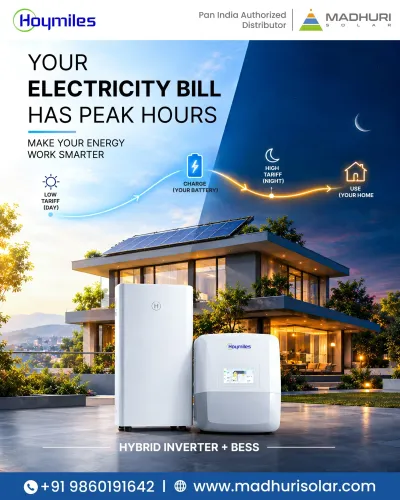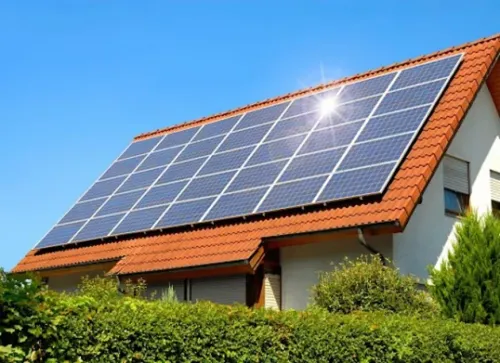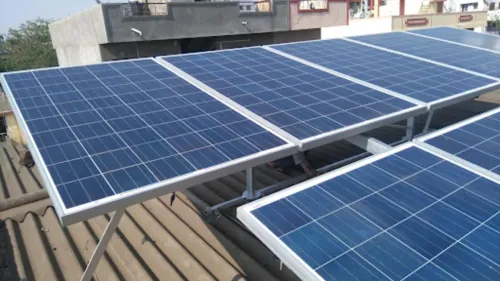

A hybrid inverter and battery do not qualify as backup equipment merely because they store solar energy. You need to verify the regional inverter model, backed-up circuit arrangement, transfer behavior, motor-starting capacity, battery compatibility, safety approvals, and reserve settings before treating the system as an outage-power solution.
Key takeaways
- Confirm the exact inverter has regionally certified backup or EPS output.
- Back up selected circuits through an approved transfer and isolation arrangement.
- Size inverter power for simultaneous loads and battery capacity for outage duration.
- Match batteries, protection equipment, wiring, codes, and site conditions before installation.
What makes a Hoymiles hybrid inverter and BESS a backup system?
A genuine solar backup system can keep selected circuits energized after utility power disappears; an ordinary grid-connected array cannot. In an on-grid inverter comparison2026? no, the decisive question is not bill reduction but whether the exact Hoymiles hybrid inverter is regionally certified and provides a specified backup or EPS output.
A similarly named US split-phase, European single-phase, or three-phase model may differ in neutral handling, phase arrangement, grid-code settings, and backup capability.
| Option | What it does during a grid outage | What it proves |
|---|---|---|
| Ordinary grid-connected inverter | Shuts down under anti-islanding protection | Solar generation and bill reduction, not backup |
| Hoymiles hybrid inverter with BESS | Isolates from the utility, forms a local supply, and powers connected backup circuits | Genuine solar backup, subject to transfer-time and load limits |
The BESS is the complete storage system, not merely a battery rating. Confirm the proposal identifies these parts:
- Battery modules with a battery-management system
- Power-conversion equipment, isolation equipment, and enclosure
- Monitoring, protection, and a backup-loads panel connected to the inverter’s EPS output
“Whole-home backup” is not automatic. Only circuits wired through that output remain powered, and servers or medical equipment may still need a separate UPS because inverter transfer is not zero-interruption performance.
PV output can also be curtailed when the battery is full or backup loads are low, so do not credit the array’s entire nameplate rating during an outage.
How will the system transfer power during an outage?
A grid failure triggers anti-islanding protection: the inverter stops exporting to the utility, opens the grid connection, and creates a separate local electrical island. Automatic transfer then moves the selected loads to the inverter’s backup output, often labelled the EPS output, where the BESS supplies power and the PV array contributes when conditions allow.
The backed-up circuits must be wired to that output or to a correctly engineered essential-loads panel. The transfer arrangement must prevent the inverter from energizing utility lines, so do not connect backup circuits through an ordinary subpanel without approved isolation and protection equipment.
| Circuit arrangement | What remains energized | Main limitation |
|---|---|---|
| Essential-loads panel | Lights, refrigeration, internet equipment, controls, and selected outlets | Only circuits moved to the backup output receive power |
| Whole-home backup | The complete distribution board | Requires model-specific capacity, transfer equipment, wiring, and load management |
| Standard grid-connected panel | Nothing during an outage | An on-grid inverter cannot safely form the island |
The transfer interval is not the same as zero-interruption UPS performance. Servers, medical devices, alarm systems, and sensitive controls may restart unless a separate UPS bridges the changeover. Once islanded, the inverter can curtail PV when the battery is full or loads are too small; do not assume the array’s full nameplate output remains available.
How do you size inverter power and battery storage?
Size inverter output kW for the largest simultaneous running load, then test its surge rating separately. Battery capacity kWh determines runtime; it does not make a low-power inverter suitable for electric heating, pumps, or whole-home loads.
1. Add the nameplate running watts for every load that can operate at once, including essential lighting, refrigeration, communications, and heating or cooling equipment. Convert the total to kW and compare it with the inverter’s continuous output rating.
2. Identify each motor’s motor starting surge, locked-rotor current, or starting VA from its nameplate or manufacturer data. Check the largest simultaneous starting event against the inverter’s peak VA rating and the stated surge duration; a refrigerator, well pump, or compressor can trip the system while running below its kW limit.
3. Confirm that the battery and its BMS can deliver the inverter’s required peak and continuous DC current. A 10 kW AC load on a 48 V-class battery draws about 208 A before inverter losses, so cable, fuse, breaker, temperature, and BMS limits matter.
4. Estimate runtime with: usable runtime in hours = battery capacity kWh × allowed depth of discharge × inverter efficiency ÷ average backup load kW.
Keep a reserve by reducing the allowed depth of discharge, and do not credit all PV nameplate output because the inverter can curtail solar when production exceeds load or battery acceptance.
A larger battery extends operation; it cannot compensate for inadequate surge capacity or a BMS discharge limit.
Which equipment, codes, and site conditions must match?
A matching battery voltage does not prove compatibility. Confirm the exact regional Hoymiles model, its firmware, the BESS model, communications protocol, and the installation approval before procurement.
| Item | Verify | Why mismatch fails |
|---|---|---|
| Inverter | Model number, phase arrangement, neutral treatment, backup/EPS rating, and regional certification | A US split-phase unit is not interchangeable with a European single-phase or three-phase model. |
| BESS | The manufacturer’s current battery compatibility list, approved firmware, voltage range, and charge/discharge limits | The inverter cannot control a battery if it cannot read state of charge or receive BMS protection commands. |
| Communications | Required CAN or RS485 wiring, pinout, termination, and firmware versions | Incorrect communications can disable charging, backup transfer, or battery protection. |
| Codes | UL 1741 and UL 1741 SB listing, plus IEEE 1547 settings for US interconnection; UL 9540 for the complete BESS | UL 9540A is a fire-propagation test method, not a substitute for a UL 9540 system listing. |
| Site and protection | NFPA 855 and local authority requirements for placement, clearance, access, ventilation, enclosure, disconnects, transfer equipment, and fire protection | Indoor and outdoor installations can require different controls; poor transfer design can energize utility lines. |
Ask the installer to attach the compatibility list, certificates, single-line diagram, protection settings, and AHJ approval to the project file. Confirm generator voltage, frequency, neutral bonding, start logic, isolation, and anti-islanding separately; a dry contact does not prove generator compatibility.
Madhuri Solar can use this document check to distinguish a genuinely approved backup design from an electrically plausible but uncertified equipment combination.
Related product
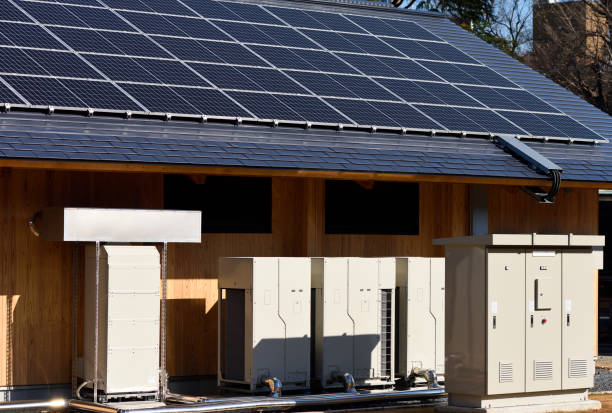 | Solar Offgrid System A Solar Offgrid System is an independent energy solution that operates without relying on the main power grid. View product → |
What operating settings determine whether backup works when needed?
A high backup reserve protects outage runtime but reduces normal bill savings. Set the backup reserve and minimum state of charge in the commissioning record, then confirm that the battery preserves them during time-of-use charging and discharging. Ask how the system performs a black start and restores its reserve after a prolonged outage.
Check these settings and limits before relying on the system:
- PV curtailment: confirm the inverter reduces or disconnects solar when the battery is full, backup loads are low, or PV exceeds the backup output’s absorption limit. Do not count the array’s full nameplate output in outage calculations.
- Temperature: use the manufacturer’s charge and discharge limits at the site’s lowest temperature. Without an active heater, a cold BESS can block charging, leaving winter PV curtailed and the battery unrecharged.
- Generator integration: verify the exact inverter manual covers the generator’s start/stop signal, synchronization, transfer sequence, grounding arrangement, and permitted operating modes. An unsupported generator connection can trip protection or damage equipment.
- Expansion: confirm that additional battery modules, parallel inverters, stacked units, or AC-coupled PV are supported by the exact model, firmware, phase allocation, protection equipment, and maximum aggregate PV rating.
- Recovery: test what happens after the outage ends, including grid reconnection, battery recharge, reserve restoration, and generator shutdown.
These details determine whether backup power remains available after several cloudy, cold, or high-load hours—not merely whether the system starts during the first minute.
Frequently asked questions
What makes a Hoymiles hybrid inverter and BESS a backup system?
The system must provide a specified backup or EPS output and isolate backed-up circuits from the utility during an outage. A standard grid-connected inverter alone cannot keep producing power for connected loads after grid power disappears.
How will the system transfer power during an outage?
A transfer and isolation arrangement disconnects the backup circuits from the utility, then supplies them from the battery and solar inverter. Confirm the documented transfer time, supported loads, neutral switching, and required protection equipment for the exact model.
How do you size inverter power and battery storage?
Size inverter power for the combined running and starting demand of the loads you want to back up. Size battery storage from load energy use over the target outage duration, while accounting for usable capacity, reserve settings, temperature, and conversion losses.
Which equipment, codes, and site conditions must match?
Check the exact inverter and battery compatibility list, battery voltage and communication requirements, protection devices, cable ratings, earthing, mounting location, ventilation, temperature range, and local electrical approval requirements.
What operating settings determine whether backup works when needed?
Review backup-reserve percentage, minimum state of charge, charge and discharge limits, export controls, time-of-use schedules, solar charging priority, and the circuits assigned to the backup output. Test the settings under an actual simulated outage.