A solar quote is not comparable until you know whether its capacity refers to panels, inverter output, battery storage, pump power, or lighting output. By separating those ratings from energy production and installation scope, you can estimate the right system size, identify hidden costs, and compare competing bids on a like-for-like basis.
Key takeaways
- Compare both kWdc module capacity and kWac inverter or export capacity.
- Demand itemised prices for modules, inverter, mounting, wiring, protection, labour, and approvals.
- Check roof condition, structural work, cable runs, shading, and access before comparing quotes.
- Add batteries, backup circuits, and grid upgrades only when your power needs require them.
Which capacity figure actually determines the solar system price?
A photovoltaic quote must show both DC module capacity in kWdc and AC inverter or export capacity in kWac.
The solar panel capacity in kWdc and inverter capacity in kWac difference changes the solar system price: cost per kWdc is not comparable with cost per kWac unless the quote states the denominator, DC-to-AC ratio, equipment scope, and taxes.
| Capacity measure | What it prices | What to specify |
|---|---|---|
| PV | Modules at peak output and inverter/export limit | kWdc, kWac, DC-to-AC ratio |
| Battery | Usable storage and discharge capability | battery capacity in kWh and power in kW, round-trip efficiency, depth of discharge |
| Pump | Motor requirement | pump power in HP, head, flow rate, operating hours |
| Lighting | Fixture demand | solar lighting output in watts and required hours |
Panel capacity is not daily kWh generation. Expected daily kWh depends on seasonal sunlight, shading, temperature, soiling, inverter clipping, azimuth, tilt, availability, and degradation. Use PVWatts as a preliminary model, but require its weather source and site assumptions in the quote.
Size the system from connected load, starting surge, daily run time, monthly electricity units, backup duration, and future load growth. A battery with high kWh but insufficient kW cannot start a motor; a pump quote without head and flow is incomplete. A price stated only as cost per kW is therefore unusable for comparison.
What items should appear in a complete solar price breakdown?
A complete solar system cost breakdown replaces one lump sum with quantities, unit rates, model numbers, warranty terms, and clear inclusions and exclusions. Read each line before comparing the installed cost per kW.
- Modules: number, wattage, model, and total kWdc.
- Inverter or power-conversion system: model, quantity, kWac, and warranty.
- Mounting structure, roof reinforcement, batteries, cables, connectors, and combiner boxes.
- DC protection: fuses, isolators, and surge protection; AC protection: breakers, isolators, and surge protection.
- Monitoring, earthing, lightning protection, transformer equipment where required, engineering, permits, utility studies, and commissioning.
- Civil work, labour, transport, taxes, utility interconnection fees, testing, and documentation.
| Quote line | Check for | Cost risk |
|---|---|---|
| Site work | Civil work, roof repair, roof treatment, scaffolding, trenching, and structural reinforcement | Hidden construction charges |
| Grid connection | Meter fees, utility studies, utility deposits, protection changes, and transformer or feeder work | An allowance mistaken for a fixed price |
| Installation | Labour, transport, testing, commissioning, and disposal | An incomplete balance of system |
| Operations | Monitoring access, warranty response, and replacement terms | Unpriced service obligations |
Module price is not installed-system price. Racking, wiring, protection, engineering, labour, interconnection, and site work can outweigh a small module-price difference.
Larger systems dilute fixed engineering, permitting, transport, and commissioning costs, reducing cost per kW until transformers, medium-voltage collection, fencing, roads, communications, or expanded interconnection studies reverse some savings. Ask whether each fee is fixed or an allowance.
How do site conditions and component choices change the quote?
Two systems rated at 100 kW can have different prices because the site, equipment and installation work are not identical. Compare solar module wattage and efficiency, temperature behaviour, warranty and available roof area; compare mono versus other module types instead of assuming the higher-wattage module is cheaper.
| Option | Price driver | Cost consequence |
|---|---|---|
| Modules | Wattage, efficiency, temperature coefficient and warranty | Higher efficiency earns its premium when setbacks, obstructions, land area or labour constrain the design; it does not guarantee a lower total cost |
| Inverter | String or central topology, MPPT count, MPPT operating voltage range, maximum DC input, export control, outage behaviour, monitoring and service terms | More inputs or controls can cost more but reduce mismatch, clipping or future operating problems |
| Mounting and wiring | Mounting structure material, corrosion protection, attachment or ballast, cable cross-section and voltage drop | Stronger materials, longer runs and difficult access increase installed cost without adding capacity |
| Site work | Roof condition, structural reinforcement, fragile surfaces, fire access paths, drainage and shading | Repairs, engineering, fall protection and layout changes add labour and balance-of-system cost |
Review DC and AC protection alongside cable routes. A long cable run may require a larger cable cross-section to limit voltage drop, while shading can require separate MPPT inputs or module-level optimisation.
Rapid shutdown equipment and labelling add cost where the adopted electrical code requires them. Earthing and lightning protection depend on the site design, not a fixed percentage of module cost. Site access, crane requirements and roof repairs can turn a lower module cost per watt into a higher installed price.
When do grid connection, batteries and backup requirements raise the price?
An on-grid solar cost rises when the utility connection is more than a meter change. Price the sanctioned load, net-metering application, bidirectional meter work, export limit, zero-export control, utility study, protection changes, and any transformer or feeder upgrade.
| Option | Main cost drivers | Price consequence |
|---|---|---|
| On-grid export | Net metering, bidirectional meter, export limit, utility study, protection and network work | Interconnection allowances can dominate equipment savings |
| On-grid zero-export | Zero-export control, meter or current transformers, commissioning | Avoids exported energy but adds controls and testing |
| Off-grid or backup | Battery, hybrid inverter, transfer equipment, protected-load wiring | Higher upfront cost, with fuel or battery replacement to plan |
A standard grid-tied inverter shuts down during a grid outage. Backup requires batteries, a hybrid inverter, transfer equipment, and protected-load wiring, so compare the required backup load rather than the whole building load.
For off-grid solar cost, compare lithium-ion and lead-acid battery chemistry, usable depth of discharge, battery warranty, replacement schedule, autonomy days, generator integration, and sizing for cloudy periods. Several cloudy days increase battery cost; generator backup can reduce battery oversizing.
Price storage by usable kWh and discharge power in kW: battery cost per kWh versus cost per kW reveals whether the system supports a long load or a short, powerful one. Confirm the quote includes racks or containers, BMS, EMS, HVAC, fire suppression, PCS, transformers, civil work, network equipment, commissioning, and augmentation reserves.
How can you compare two solar quotations and identify the true price?
Treat an itemised solar quote as a technical offer, not just a price. For commercial solar procurement, place every solar EPC quote in Pune, Maharashtra, or elsewhere into one comparison table before choosing a supplier.
| Field | Bid A | Bid B | Check |
|---|---|---|---|
| Capacity | DC kW, AC kW, usable battery kWh, battery discharge kW | Same units | Reject cost-per-kW figures with no denominator |
| Energy and load | Annual and monthly production assumptions; peak load; backup hours | Same assumptions | Recalculate with weather, shading, clipping and degradation |
| Equipment | Module and inverter model numbers, quantities and warranties | Same details | Confirm datasheets and warranty issuer |
| Design | Degradation assumptions, mounting design, cable sizes, protections and monitoring | Same details | Check roof attachment, voltage drop and protection schedule |
| Delivery | Installation scope, exclusions, civil work, meter fees and commissioning tests | Same details | Mark each item fixed, allowance or excluded |
Reject a comparison between an itemised solar quote and a total-only bid until the latter supplies this data. Show gross installed price, incentive-adjusted price and lifetime cost separately; list every tax credit or subsidy as an assumption, never as a silent deduction.
Ask who owns the meter application, utility correspondence, permits, performance guarantee, warranty claims and future battery replacement. Include battery augmentation, replacement timing, and round-trip efficiency in lifetime cost.
Madhuri Solar can be considered alongside other providers when its scope makes these assumptions visible. Choose the bid that delivers the required energy, load support and compliance with the fewest exclusions—not the lowest headline price.
Related products
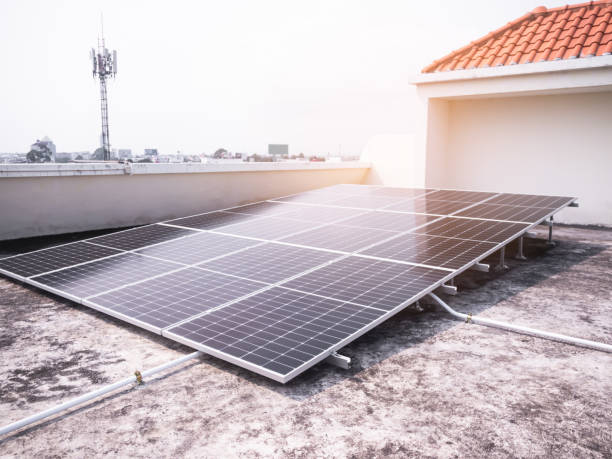 | Solar Rooftop Ongrid System A Solar Rooftop Ongrid System is an efficient, eco-friendly solution that converts sunlight into electricity. View product → |
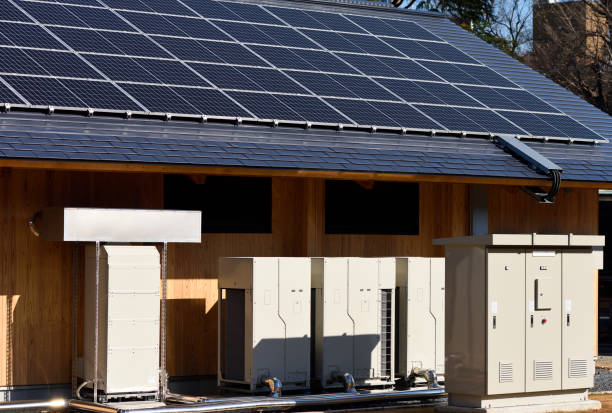 | Solar Offgrid System A Solar Offgrid System is an independent energy solution that operates without relying on the main power grid. View product → |
Frequently asked questions
Which capacity figure determines a solar system price?
A quote must show both DC module capacity in kWdc and AC inverter or export capacity in kWac. Module capacity prices the solar array, while inverter and export capacity affect conversion and grid limits.
What should a complete solar price breakdown include?
Request separate prices for modules, inverters, mounting structures, DC and AC cables, protection equipment, monitoring, installation labour, engineering, approvals, testing, commissioning, taxes, and warranties.
How do site conditions and component choices change the quote?
Roof type, structural reinforcement, shading, cable distance, access, mounting design, module and inverter specifications, and installation complexity can all change the final price.
When do grid connection, batteries, and backup requirements raise the price?
Grid studies, metering changes, export limits, protection upgrades, batteries, backup-capable inverters, and dedicated backup circuits add cost when your site or operating requirements demand them.
How can you compare two solar quotations accurately?
Align the kWdc and kWac capacities, compare equivalent equipment and warranties, identify excluded work, check battery and backup scope, and calculate the complete installed price rather than comparing the headline total.