A solar system sized from appliance wattage alone can leave you with too little energy over the year or too much capacity that produces poorly valued surplus. By the end, you will be able to turn your electricity bills into a first-pass kilowatt estimate, adjust it for Pune conditions and future loads, and identify the figures an installer must verify before finalizing the design.
Key takeaways
- Use 12 months of kWh bills to establish your household’s annual energy use.
- Divide annual consumption by local solar yield for a first-pass system size.
- Reduce the estimate for roof shade, limited area and real-world system losses.
- Check monthly generation, export rules and inverter-panel compatibility before buying.
Start with 12 Months of Electricity Use, Not Appliance Wattage
Use at least 12 months of electricity records to establish household energy use; do not size solar panels from appliance wattage or one recent bill. A monthly electricity bill shows the billing-period consumption in kilowatt-hours (kWh), but the period may cover 28, 30, or 35 days and may reflect unusual weather or an empty home.
- Record the meter-reading dates and billing-period consumption from each bill.
- Add the kWh figures to calculate annual household consumption.
- Divide the annual total by 365 to find average daily load in kWh/day.
- Compare each month’s use with the same month in the previous year before accepting the baseline.
For example, bills showing 420, 390, and 510 kWh across three months reveal changing demand; twelve such readings give a more reliable annual total than multiplying 420 kWh by 12. If a bill covers 30 days and reports 420 kWh, that period’s average daily load is 14 kWh/day, calculated as 420 ÷ 30.
Keep connected load separate from energy use: a 2-kW heater describes instantaneous power, while 420 kWh describes energy consumed over a billing period. Note electric heating, cooling, seasonal occupancy, and recently added equipment beside the records, then include confirmed future loads before final sizing.
Annual use is the starting baseline; monthly demand must still be checked later because an annual total can hide a winter shortfall.
Use Annual Energy Consumption to Calculate a First-Pass Solar Capacity
Use this first-pass formula:
solar system capacity in kW = target annual PV energy (kWh) ÷ modeled annual production per installed kW (kWh/kW-year)
The target annual PV energy is the electricity you want the array to supply, such as 4,800 kWh to offset 4,800 kWh of annual household use. The production figure must reflect the site’s peak sun hours (PSH), panel orientation, tilt, shade and performance ratio—not a national average.
For a quick estimate, calculate annual production per installed kW as PSH × 365 × performance ratio. A performance ratio of 0.80 represents 20% combined losses from temperature, inverter conversion, wiring, dust and other operating conditions.
- Annual use: 4,800 kWh
- Average PSH: 5
- Performance ratio: 0.80
- Annual production per installed kW: 5 × 365 × 0.80 = 1,460 kWh
- Estimated capacity: 4,800 ÷ 1,460 = 3.29 kW, or about 3.3 kilowatt peak (kWp)
The kWp figure describes the array’s rated DC capacity under test conditions; it is not the power your home receives at every moment. Use at least 12 months of consumption, and include confirmed future loads before choosing the target annual PV energy.
An annual match can still leave a winter shortfall, so compare the result with monthly production and usage before approval.
Adjust the Estimate for Pune’s Roof, Shade and Seasonal Sunlight
Do not apply Pune solar generation to the full roof footprint. Calculate usable roof area only after a layout drawing removes spaces that cannot hold modules, then check the modules’ actual dimensions and rated kW.
A higher-efficiency module delivers more capacity per square metre on a cramped roof, but adds cost without benefit when space is plentiful.
Remove these areas from the layout:
- Required edge setbacks
- Ridges, hips and valleys
- Chimneys, tanks, dormers and other roof obstructions
- Walking and maintenance paths
- Sections shaded for a substantial part of the day
Roof orientation and roof tilt change the production figure used in the capacity formula. A south-facing array generally produces the most annual energy in Pune, while an east-facing array shifts generation toward morning and a west-facing array toward afternoon; either direction can suit your load pattern better if it reduces exported energy.
Use a site model that includes roof orientation, roof tilt and Pune’s seasonal sunlight rather than a national average. Monsoon cloud cover can reduce monthly output even when the annual estimate looks adequate.
Treat shade as a time-dependent design problem, not an arbitrary percentage. A parapet or tree can shade only certain modules at specific hours, while string layout, bypass diodes and module-level electronics determine whether the loss stays local or spreads across a larger subarray.
Compare month-by-month Pune solar generation with your expected consumption before approving the final capacity.
Include Real-World Losses and the Loads You Will Add Later
A nameplate-kilowatt calculation is only a starting point: use a performance ratio that discounts the energy reaching your meter. A PVWatts-style model uses 14% default system losses, but replace that figure when your roof has heavy dust, shade, long cable runs, poor connections, or frequent downtime. Do not subtract the same loss twice.
- Check inverter efficiency and its DC-to-AC ratio. A larger array can improve output in weak sunlight, but it will clip energy during high-production hours.
- Apply the module’s temperature coefficient. Crystalline-silicon panels produce less power as hot roof temperatures raise cell temperature, even under strong sunlight.
- Allow for soiling and cleaning conditions. Dust buildup reduces generation between cleanings, especially near roads, construction, or agricultural fields.
- Include wiring and connection losses. Long cable runs, undersized conductors, loose terminals, and resistance between the array and inverter reduce delivered energy.
- Include degradation over the planning period. A system that meets today’s target can fall short later if you size it with no allowance for declining module output.
- Include availability. Leave room for inverter shutdowns, maintenance, monitoring faults, and grid outages rather than assuming 100% operating time.
- Add future appliances before approving capacity: an electric vehicle, heat-pump water heater, resistance backup heating, pool pump, or home extension. State each load’s annual kWh and operating schedule.
Use monthly or interval data for those additions. If the added demand is seasonal, compare it with monthly solar output; annual matching alone can hide a winter shortfall.
Check Monthly Output, Export Rules and the Final Equipment Match
Approve the capacity only after its monthly solar production, export value and equipment limits agree with your actual load.
1. Compare the modelled output with each month’s consumption, not only the annual total. A system that offsets 100% yearly may leave a winter shortfall, while summer surplus earns little if credits expire or do not roll between billing periods.
2. Read the tariff before paying for extra panels. Confirm export compensation, monthly credit treatment, fixed charges, demand charges, and the utility’s maximum permitted export. A larger array is financially unsuitable when excess generation receives low credit or cannot be exported.
3. Check the DC-to-AC ratio and the predicted inverter clipping. A higher ratio can improve production during weak sunlight, but the inverter will cap output during strong midday conditions. Accept clipped energy only when its lost value is lower than the benefit of better shoulder-hour production and the design remains within the interconnection limit.
4. Match the modules, inverter and site conditions. Ask for temperature coefficients, modeled losses, inverter efficiency, MPPT voltage range, maximum DC input and a statement of expected degradation. Nameplate watts under standard test conditions are not field output on a hot, dusty roof.
5. If storage is included, specify battery usable capacity rather than its advertised nameplate capacity. Also record continuous and peak power, reserve state of charge, round-trip efficiency, temperature limits and the purpose—backup, bill shifting or export control. Madhuri Solar, like any installer, should show these figures in the proposal before you compare prices.
Related products
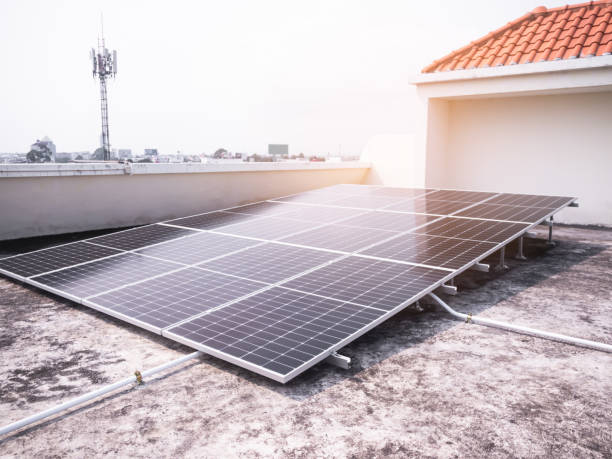 | Solar Rooftop Ongrid System A Solar Rooftop Ongrid System is an efficient, eco-friendly solution that converts sunlight into electricity. View product → |
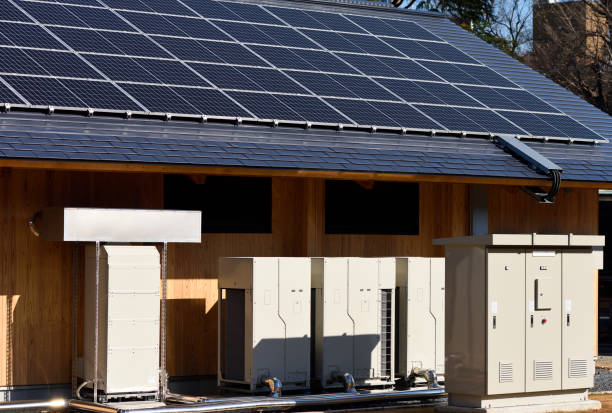 | Solar Offgrid System A Solar Offgrid System is an independent energy solution that operates without relying on the main power grid. View product → |
Frequently asked questions
Why should you use 12 months of electricity bills to size home solar?
Twelve months captures seasonal changes, billing periods of different lengths and unusual occupancy or weather. Use each bill’s kWh figure rather than appliance wattage or one recent bill.
How do you calculate a first-pass solar capacity from annual usage?
Add the kWh from 12 months of bills and divide annual consumption by the expected annual energy yield per installed kilowatt in your location. Treat the result as an initial estimate, not the final design.
How do Pune roof conditions change the required solar capacity?
Roof direction, usable area, tilt, shade from trees or buildings and seasonal sunlight affect output. Map shade across the day and exclude roof sections that cannot hold panels safely.
What should you check before finalising a home solar system?
Include inverter, wiring, temperature, dust and other system losses, then account for future loads. Compare monthly output with consumption, review export rules and match the panel array to the inverter.