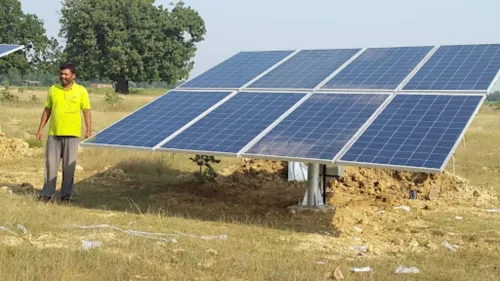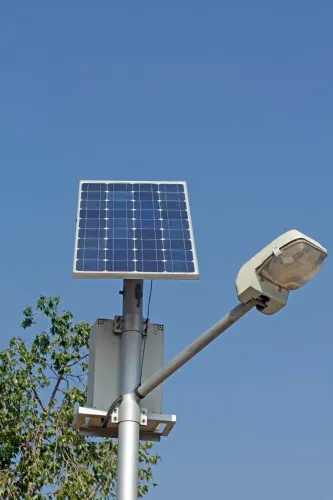
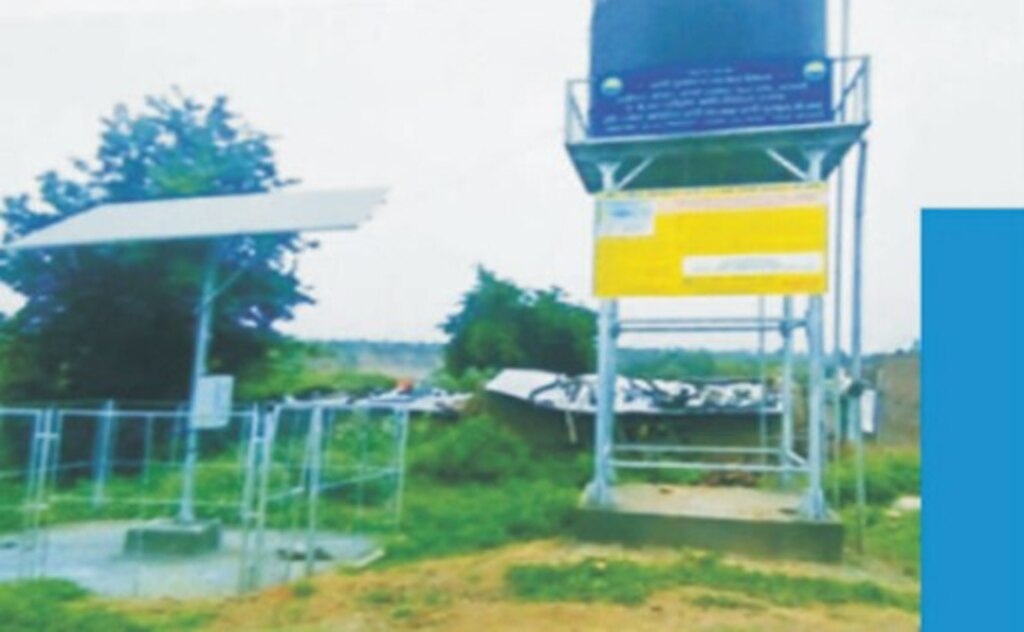
A solar pump delivers reliable irrigation only when the water requirement, total dynamic head, borewell yield, solar resource, and irrigation pressure are calculated together. By the end, you will be able to estimate the required flow, compare pump types, size the PV and storage system, and specify controls and protections that keep water moving through changing conditions.
Key takeaways
- Calculate daily water volume from crop demand, rainfall and cultivated area.
- Include static lift, drawdown, friction and pressure when sizing total dynamic head.
- Pair pump output with irrigation method, solar capacity and sufficient water storage.
- Add dry-run protection, surge control, maintenance access and backup pumping where needed.
Calculate the irrigation volume and flow before choosing a pump
Convert the daily water balance into volume before selecting a pump. Use crop evapotranspiration minus effective rainfall to find the net crop requirement. For measurements in millimetres and area in hectares:
Net volume (m³/day) = area (ha) × [crop evapotranspiration − effective rainfall] (mm/day) × 10
Divide that result by application efficiency to account for water lost during irrigation. Then divide by planned pumping hours per day:
Required flow (m³/hour) = gross daily volume ÷ pumping hours
CROPWAT and the FAO Penman–Monteith method for crop water requirements and irrigation timing can provide the evapotranspiration estimate. For example, 2 hectares at 6 mm/day, with 1 mm of effective rainfall, 80% application efficiency, and 8 pumping hours require 15.6 m³/hour, or about 260 litres/minute.
| Method | Planning application efficiency | Flow implication |
|---|---|---|
| Drip | 85–95% | Lower volume; schedule frequent, longer deliveries |
| Sprinkler | 70–85% | Account for wind and evaporation losses |
| Surface or flood | 50–70% | Higher volume; allow longer application time |
Calculate the event volume as well when irrigation is scheduled every two or three days: multiply daily gross volume by the interval, then divide by available pumping hours during that event. Do not size from the solar array’s nominal kWp; the pump must deliver this calculated flow at the system’s required head.
Use total dynamic head to match the pump to the water source and irrigation system
Select the pump at its expected flow and total dynamic head, not its advertised maximum flow. The usable operating point is where the pump curve meets the irrigation-system curve; changing water levels or restrictions move that intersection.
Calculate total dynamic head from these components:
- Static lift: measure from the static water level to the pump and the highest outlet, including terrain elevation.
- Drawdown: use the pumping level at the planned flow, not the resting level. Include seasonal drawdown and recovery data so the pump still performs during the irrigation season.
- System losses: add pipe friction, bends, rising terrain, filters, valves, and other fittings. A long, narrow pipe or a clogged filter can consume more head than expected; a larger pipe can reduce losses and lower the required pump or solar array.
- Outlet pressure: add the pressure required at the field outlet, sprinkler, or drip head. Convert pressure to head before adding it to the calculation; 1 bar is approximately 10.2 metres of water head.
Check the result against the well yield. A pump that extracts water faster than the borehole recovers can cause excessive drawdown, sand entry, air intake, or dry running, so specify a low-water-level sensor and dry-run protection.
Finally, select a pump whose curve delivers the required flow at this TDH. Recheck that point under the lowest expected pumping level and the filter’s dirty pressure drop.
Match pump type, irrigation method, solar capacity, and water storage
Choose the pump from source depth and delivery pressure, not panel wattage. A surface pump suits an open tank, canal, or shallow well where the pump remains accessible and suction lift stays within its specified limit.
A submersible pump operates underwater; a borewell pump is the narrow, deep-well version, selected for casing diameter and expected drawdown. Both avoid priming losses, but lifting a pump for service needs access.
| Option | Best fit | Sizing consequence |
|---|---|---|
| Surface pump | Open water or shallow well | Check suction lift and priming; protect it from silt. |
| Submersible pump | Reservoir or well below suction limit | Match motor cooling, cable, and total dynamic head. |
| Borewell pump | Narrow, deep bore casing | Verify casing diameter, drawdown, and pump curve. |
Match drip irrigation versus sprinkler irrigation versus flood irrigation to the water volume and pressure the field needs. Drip uses lower outlet flow but demands clean filtration and pressure regulation; sprinklers need sustained pressure, so friction and elevation consume more head; flood irrigation needs high delivered volume but little outlet pressure.
Size PV for the calculated daily volume, pump efficiency, total dynamic head, and worst-season solar time series—not annual average or nominal kWp.
A tank must hold required irrigation volume for the autonomy period plus dead storage, evaporation, leakage, and emergency reserve; nominal capacity is not deliverable water. Use elevated storage for irrigation after sunset or through cloudy hours.
Add livestock troughs as a separate demand in storage and pump schedules, because animal use can empty the irrigation reserve.
Plan for clouds, night-time demand, and changing solar output
Direct solar pumping suits irrigation that runs during strong daylight, when water can go straight to the field or into a tank. It avoids battery losses, but cloudy periods and evening demand reduce delivered volume.
| Option | Use it when | Main planning point |
|---|---|---|
| Direct daylight pumping | Irrigation can follow solar availability | Size delivery for the weakest useful daylight hours, not the pump’s nameplate flow |
| Elevated water storage | Water is needed after sunset or across cloudy hours | Size usable volume for the autonomy period, excluding dead storage, evaporation, leakage, and reserve |
| Battery-backed irrigation pumping | Night irrigation is essential and a tank is impractical | Include battery losses, depth-of-discharge limits, replacement, and several cloudy days in the design |
A direct-coupled controller needs maximum-power-point tracking or an equivalent variable-speed strategy. Without it, the pump can stall or repeatedly start and stop as passing clouds change irradiance.
PV module standard test conditions and temperature coefficient explain why nameplate power is not delivered power. STC uses 1,000 W/m² and a 25°C cell temperature; crystalline-silicon output commonly falls about 0.3% to 0.5% per °C above that temperature. Hot panels can therefore produce less water even under bright sun.
Use time-series solar data for the crop’s critical irrigation season, not annual average radiation. Match the crop calendar to cloudy-season output, then test whether the tank or battery covers the resulting shortfall. A system that meets annual demand can still under-irrigate during the weeks crops need water most.
Build reliability with dual-pump controls, protection, and maintenance
Two pumps need separate controls, isolation, and fault indication even when they share a solar array. Use independent pump controls for separate irrigation zones, or specify dual-pump duty-and-standby operation: alternate the duty pump by run hours, start the standby automatically after a fault, and prevent both pumps starting against an undersized supply.
Require the supplier to document:
- Pump curves showing flow against total head, motor rated current, voltage range, efficiency, and the operating point at seasonal pumping level.
- A wiring diagram, controller manual, terminal schedule, commissioning procedure, spare-parts list, and enclosure rating suitable for outdoor exposure.
- dry-run protection and low-water-level sensor settings, with a restart delay and a manual reset after repeated low-water trips.
- overcurrent protection sized to the motor and cable, lockable disconnects for each pump, grounding and bonding, and surge protection for the array, controller, and long pump cables.
- A fault relay or alarm that records overload, phase or voltage fault, sensor failure, and standby-pump start. A failed sensor must stop the pump rather than force continuous operation.
- Filtration selected from measured sand and sediment load, not a nominal mesh number alone. Provide a pressure gauge before and after the filter; rising differential pressure must trigger cleaning before emitters clog or the pump runs against excessive resistance.
Ask Madhuri Solar to show these settings on the as-built wiring diagram and commissioning sheet, not only in a sales quotation. Inspect cable glands, conduit, filters, sensors, and grounding connections at each scheduled service.
Related products
 | Solar Dual Water Pumping System The Solar Dual Water Pumping System efficiently harnesses solar energy to power two independent water pumps, providing a sustainable solution for... View product → |
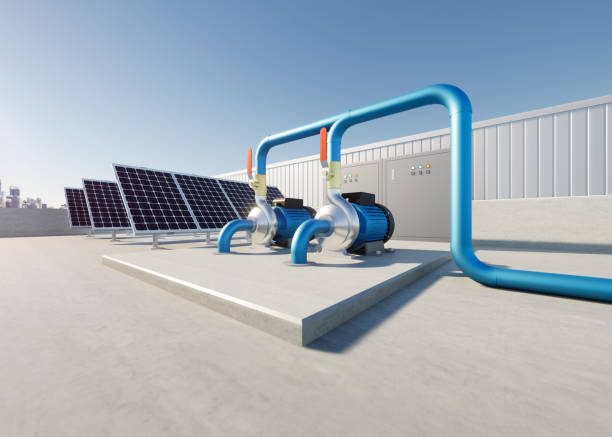 | Solar Pumping System A Solar Pumping System is an eco-friendly solution that harnesses solar energy to power water pumps for irrigation, livestock, and domestic use. View product → |
Frequently asked questions
How do you calculate the water volume needed for solar irrigation?
Convert the net crop requirement from millimetres into volume using the cultivated area, then account for irrigation-system losses and the required daily flow.
What is total dynamic head in a solar pumping system?
Total dynamic head combines vertical lift, water-level drawdown, pipe friction, fittings and the pressure required at the irrigation equipment.
How should you size solar capacity and storage for agricultural pumping?
Match the pump’s flow and head duty to expected sunlight, irrigation timing and seasonal demand, then use water storage to cover clouds and night-time requirements.
What protections improve solar water-pump reliability?
Use dry-run, overload, overvoltage and low-water protection, plus planned maintenance and dual-pump controls when uninterrupted irrigation matters.