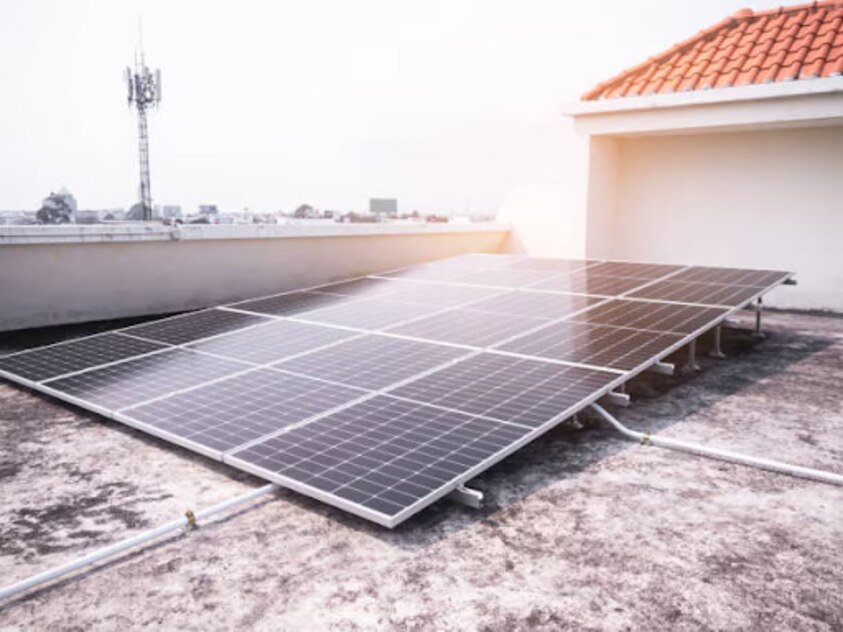
A residential solar quote is shaped by more than panel wattage: system size, roof geometry, electrical upgrades, permitting, equipment selection, and incentives all change the amount you pay. By separating these costs and comparing proposals on the same technical basis, you can identify whether a lower headline price is genuinely better value.
Key takeaways
- Request gross price, price per kilowatt, and post-incentive amount.
- Size the system from annual electricity use and usable roof area.
- Check shading, roof repairs, structural work, and electrical upgrades separately.
- Compare warranties, battery terms, financing charges, and maintenance obligations.
What should a residential rooftop solar quote include?
A trustworthy quote shows three separate numbers: the gross total project price, the price per kilowatt, and your expected amount after incentives. The total project price is the installed cost before rebates, tax credits, or financing.
For solar, compare the price per kilowatt using the DC array size, written as $/Wdc: an $18,000 system with 6,000 watts of modules costs $3/Wdc. Confirm whether “kilowatt” means DC module capacity or AC inverter capacity.
Ask the installer to itemize:
- Photovoltaic modules cost, including the model, wattage, quantity, and product warranty.
- Inverter, mounting structure, cables, protection devices, monitoring equipment, labour, design, transport, taxes, approvals, and commissioning.
- Main-panel replacement, busbar work, load-management equipment, utility studies, or interconnection work.
- Roof repairs or replacement, and any future remove-and-reinstall cost if the roof is near the end of its service life.
- Battery price separately by usable kilowatt-hours and continuous power in kilowatts.
- Workmanship coverage, inverter replacement labour, monitoring fees, and warranty exclusions.
Calculate the net amount only after checking each incentive’s eligibility, ownership rules, equipment requirements, and payment timing. Separate an upfront rebate or tax credit from future performance payments and net-metering bill credits; they are not the same discount.
A cash purchase, loan, lease, and power-purchase agreement allocate incentives and financing costs differently, so compare the amount due at signing and the total contracted payment.
How do electricity use and roof capacity determine system size?
Use 12 months of bills to calculate monthly electricity consumption, not a single high or low bill. Add the monthly kWh, divide by 12, and compare that demand with a production estimate for your location; the required DC size is annual consumption divided by expected annual kWh per installed kilowatt.
- Record monthly kWh and identify seasonal peaks. A system sized only for average use may leave you buying more grid electricity during high-demand months.
- Check the sanctioned load on your electricity bill or connection documents. It limits the capacity your utility will approve or connect, so a 6 kW array may need a sanctioned-load increase even when your roof can hold it.
- Complete a usable roof area determination after excluding fire-access pathways, edge setbacks, vents, skylights, water tanks, and shaded sections. Roof area sets the physical ceiling, regardless of your electricity use.
- Convert the target into module count: a 5 kW DC system needs about nine 550-watt modules or ten 500-watt modules, before layout constraints. Higher-wattage or higher-efficiency modules fit more capacity into limited roof space, but their price and dimensions affect rails, clamps, and handling.
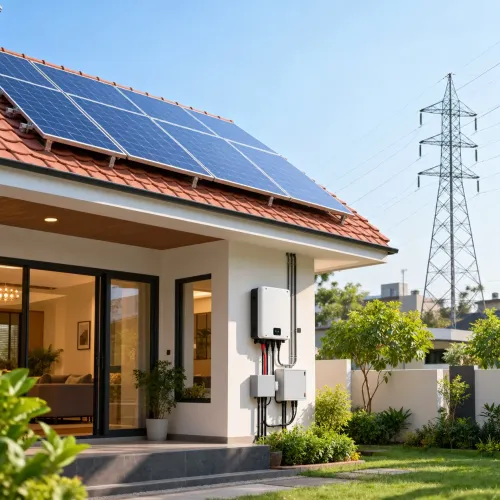
- Match inverter capacity to the array and the utility rules. A 5 kW DC array may use a 4 kW or 5 kW inverter, depending on the design and acceptable DC-to-AC ratio; never compare quotes using panel capacity alone.
Choose the smaller of the energy-based size, sanctioned-load limit, and roof-capacity limit, then document what would need upgrading to exceed it.
How do roof type, orientation, shading, and structural work change the price?
The same 5 kW system costs different amounts because installers price the work needed to reach, attach, protect, and wire the array—not only the panel capacity. Roof access, pitch, attachment method, safety equipment, and conduit length can change labour and balance-of-system costs substantially.
| Roof type | Main cost driver | Likely price effect |
|---|---|---|
| reinforced concrete slab roof | Ballasted frames, chemical anchors, waterproofing, and heavier structural checks | Often simpler access, but ballast or drilling adds material and labour |
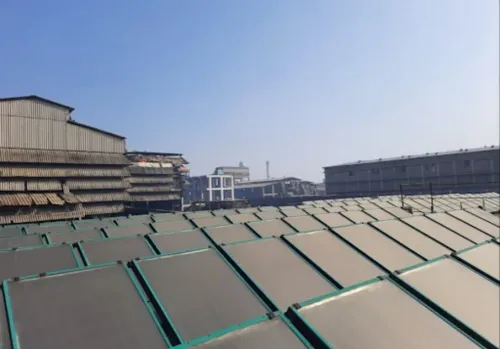
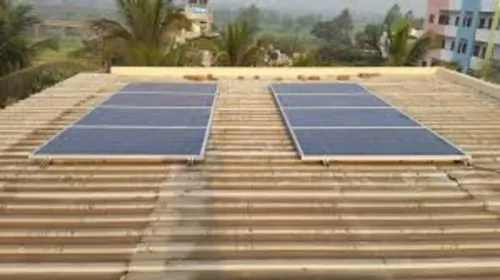
| metal sheet roof | Roof-specific clamps, purlin locations, sealing, and fall protection | Efficient installation when the sheets and supports are sound |
| clay tile roof | Tile removal, breakage allowance, replacement tiles, hooks, and careful movement | More labour and repair risk than a uniform surface |
| asbestos or fragile roofing | Specialist safety controls, limited access, and possible roof replacement | Highest risk; a structural or roofing solution may be needed before solar |
A south-facing roof in India usually produces more energy than an east- or west-facing plane, but orientation changes installation price mainly when the array must span several roof faces. Multiple pitches need extra rails, junctions, cable routes, design time, and sometimes module-level power electronics.
Shade from a parapet, tree, chimney, or neighbouring building reduces output and can make one string underperform. Trimming obstacles, relocating modules, using optimisers, or choosing microinverters raises the quote.
Ask whether the roof needs a structural engineer’s sign-off, repairs, waterproofing, or replacement. Installing on a roof near the end of its life can create a later remove-and-reinstall bill; replacing it first costs more now but avoids dismantling the array.
How do panels, inverters, batteries, and electrical upgrades affect cost?
A roof-constrained home gets more value from higher-efficiency modules than a spacious roof. Monocrystalline panels using higher-efficiency modules deliver the target DC capacity in fewer square metres, reducing rails, clamps, attachment points, and installation labour. Compare those savings with the module premium; module wattage alone does not show the better value.
Bifacial modules justify their added price when their rear surface receives useful reflected light from a bright roof or an elevated mounting arrangement. A flush-mounted array close to a dark roof gives little rear-side gain, so the extra cost may not recover through production.
| Option | Cost effect | When the premium makes sense |
|---|---|---|
| String inverter | Lower equipment cost; one central failure point | Use on an unshaded roof with one or two roof orientations |
| Microinverters or optimizers | Higher equipment and replacement cost | Use when shading or multiple orientations would reduce string output |
| Hybrid inverter with battery | Adds power-conversion and backup equipment | Choose it when outage protection matters, not merely to increase solar production |
Price batteries by usable kWh and continuous power in kW, not nameplate kWh. Backup operation also needs islanding protection, an automatic transfer function, and a critical-loads panel or load controls.
Check the electrical service separately from the array price. An overloaded installation can require:
- Main-panel replacement or busbar work
- A supply-side connection or load-management equipment
- Utility transformer or interconnection work
Pay for these upgrades when the existing service cannot safely accept the proposed PV and battery flows under utility rules and electrical code. Otherwise, they add cost without adding generation.
How should you compare solar quotes, incentives, and long-term obligations?
Choose the cheaper proposal only after matching system size, annual energy assumptions, included work, warranty obligations, and financing structure. Compare the array at the same DC wattage and compare batteries by usable kWh and power in kW, not by advertised capacity alone.
| Check | Quote A | Quote B |
|---|---|---|
| System basis | Module and inverter model numbers, DC size, annual kWh, and loss assumptions | Same figures, using one production model such as NREL PVWatts |
| Soft costs | Design, transport, labour, permits and interconnection, utility fees, inspection, taxes, and commissioning | The same inclusions, not “customer responsibility” exclusions |
| Equipment scope | Mounting, cables, protection devices, monitoring, and promised brands | Identical scope and written permitted substitutions |
| Warranty exposure | Module product and performance warranties, inverter replacement, workmanship, monitoring, and warranty-replacement labour | Matching durations, exclusions, response times, and roof-penetration responsibility |
| Money owed | Gross price, loan interest and fees, down payment, escalation, and final payment | Same financing basis, or compare total lifetime payments |
| Incentives | Taxes and incentives shown separately, with eligibility and timing stated | Same treatment of rebates, export credits, and retained incentives |
Require written approval before a supplier replaces a specified module or inverter. “Equivalent wattage” does not guarantee matching efficiency, dimensions, connectors, warranty, or availability.
Ask who owns the system, incentives, renewable-energy credits, monitoring account, and removal obligation in a lease or power-purchase agreement. Ask what happens if the roof needs repair.
Madhuri Solar can clarify these comparisons by issuing model-specific scope and commissioning records rather than leaving substitutions or handover duties implicit.
Related product
 | Solar Rooftop Ongrid System A Solar Rooftop Ongrid System is an efficient, eco-friendly solution that converts sunlight into electricity. View product → |
Frequently asked questions
What should a residential rooftop solar quote include?
Ask for the gross installed price, price per kilowatt, expected price after incentives, system size, equipment list, installation scope, warranties, payment schedule, and exclusions.
How do electricity use and roof capacity determine system size?
Use your past 12 months of electricity bills to estimate demand, then check whether the usable, unshaded roof area can fit enough panels. A larger system is not useful if the roof or sanctioned electrical load cannot support it.
How do roof conditions affect rooftop solar price?
Roof type, orientation, shading, access, waterproofing, structural reinforcement, and repairs change labour, mounting hardware, design, and installation costs.
How do panels, inverters, batteries, and electrical upgrades affect cost?
Panel wattage and efficiency affect the number of panels; inverter type and capacity affect conversion and backup options; batteries add storage cost; cabling, protection devices, meters, and service-panel upgrades add electrical work.
How should you compare solar quotes and incentives?
Compare identical system sizes and equipment specifications, confirm what the incentive covers, and check financing interest, warranty duration, maintenance, replacement terms, monitoring, approvals, and removal obligations.