Installing a solar power system involves much more than placing panels on a roof. A well-planned Solar Panel Installation begins with understanding electricity consumption, evaluating the available space, selecting suitable equipment, and designing a system that can operate reliably for years.
For homeowners, businesses, institutions, and property owners considering renewable energy, knowing how the installation process works makes it easier to evaluate proposals and avoid poorly planned systems.
The Process Begins With Electricity Consumption
Before deciding how many solar panels are required, it is important to understand how much electricity the property actually uses.
A solar professional may review recent electricity bills to identify:
- Average monthly electricity consumption
- Seasonal changes in power usage
- Connected electrical load
- Daytime electricity requirements
- Available sanctioned load
- Potential future increases in consumption
A household with moderate electricity use will naturally require a different system from a school, office, factory, or commercial property.
Roof Assessment Comes Next
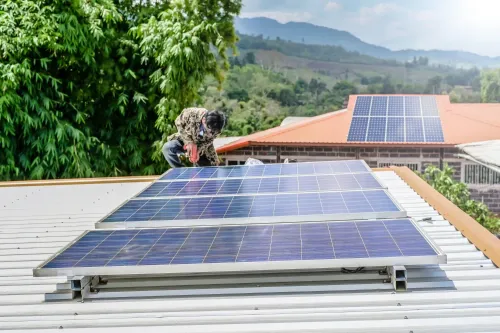
Not every roof provides the same conditions for solar generation. The usable area, orientation, shading, structural condition, and surrounding buildings all influence system planning.
During a site assessment, installers typically examine whether trees, water tanks, adjacent structures, parapet walls, or other objects could create significant shadows.
The condition of the roof is also important. Solar modules are designed for long-term use, so existing waterproofing or structural issues should ideally be identified before mounting structures are installed.
System Design Determines How Everything Fits Together
Once the site conditions and energy requirements are understood, the system can be designed.
A typical rooftop solar system may include:
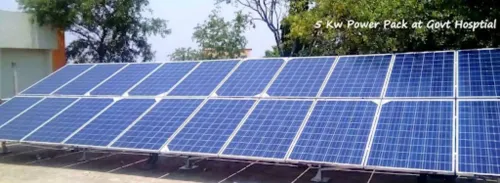
- Solar photovoltaic modules
- Mounting structures
- Solar inverter
- DC and AC cables
- Protection devices
- Earthing arrangements
- Distribution connections
- Monitoring equipment
The exact configuration depends on whether the installation is grid-connected, off-grid, or hybrid.
Grid-connected systems generally work alongside the electricity supply. Off-grid systems require energy storage because they are designed to operate independently from the grid. Hybrid systems combine solar generation with batteries and other available power sources.
Installation Quality Matters
Even high-quality solar equipment can underperform when installation practices are poor.
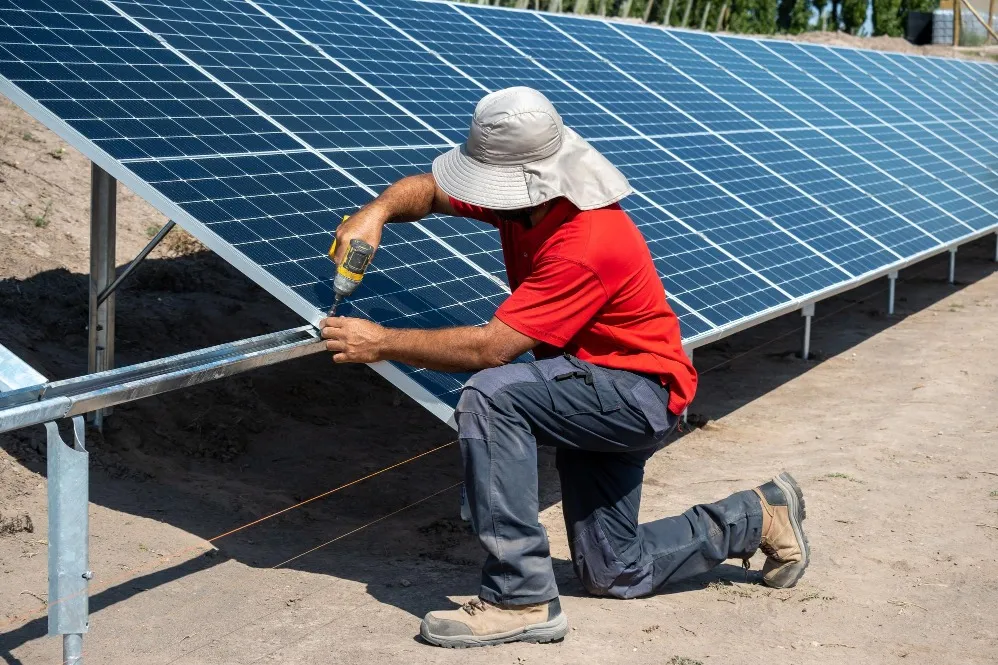
Mounting structures should be properly secured. Cable routing should be neat and protected. Electrical connections, earthing, isolators, and protection systems should follow appropriate technical practices.
Panel placement should also allow reasonable access for inspection and cleaning.
For properties exposed to seasonal dust and heavy monsoon conditions, these practical details can influence long-term system reliability.
What Happens After Installation?
After the physical installation is completed, the electrical system needs to be tested before normal operation.
Depending on the type of system, commissioning may include checking:
- Module connections
- Inverter operation
- Voltage levels
- Earthing
- Protection equipment
- Generation monitoring
- Grid synchronization where applicable
For grid-connected systems, additional utility procedures may be necessary depending on the applicable regulations and connection arrangement.
Solar Generation Changes Throughout the Year
Solar panels do not produce exactly the same amount of electricity every day. Generation varies with sunlight, weather, temperature, shading, panel cleanliness, system design, and seasonal conditions.
Cloudy periods and the monsoon season can reduce generation compared with clear days. This is why solar planning should be based on realistic annual performance rather than an assumption of constant daily output.
Planning Before Purchasing Makes a Difference
A successful solar project starts with matching the system to the property rather than simply choosing a standard package.
Companies such as Madhuri Solar work across solar power applications where site conditions, electricity requirements, and system configuration need to be considered together.
Before proceeding with Solar Panel Installation, property owners should understand their consumption, usable installation area, proposed system capacity, equipment specifications, safety provisions, and expected generation. Those fundamentals provide a much stronger basis for making an informed renewable energy decision.
Keywords