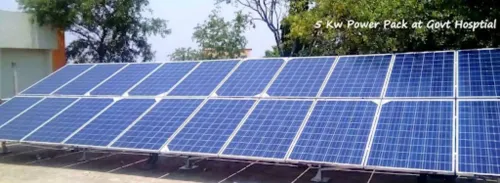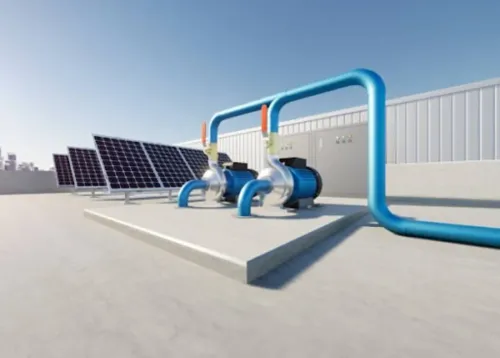
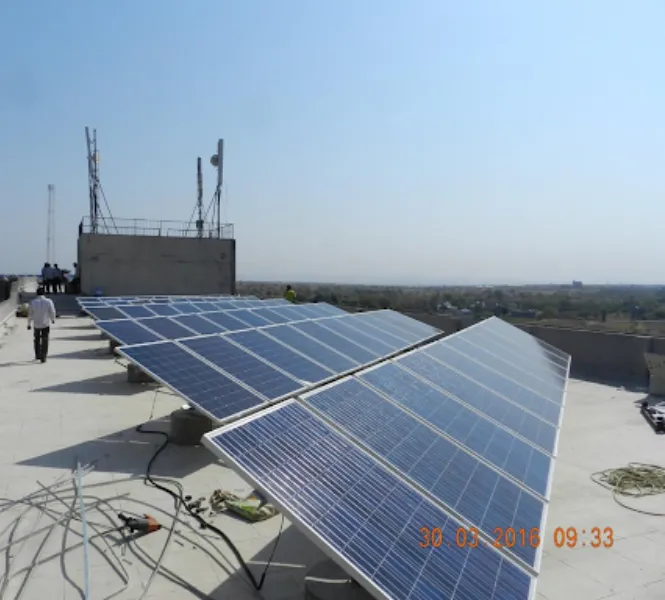
Comparing Solar System Price can become confusing when several quotations describe apparently similar systems but show very different totals. The difference often comes from equipment specifications, system architecture, installation scope, mounting requirements, storage, warranties, and site conditions.
A useful comparison therefore requires more than checking the final amount.
Make Sure Capacity Is Comparable
First confirm that every quotation is based on the same or appropriately justified system capacity.
If one provider recommends a significantly different capacity, ask why.
The answer should relate to electricity consumption, usable installation area, load requirements, or the purpose of the system.
Compare Module Specifications
Do not compare proposals simply by counting panels.
Review:
- Module manufacturer
- Model
- Rated output
- Technology
- Efficiency
- Product warranty
- Performance warranty
Higher-capacity modules do not automatically make one system better. Suitability depends on the complete design.
Compare Inverter Specifications
Two quotations can include the same solar capacity while using different inverter technologies or specifications.
Check inverter capacity, features, monitoring capabilities, compatibility, and warranty.
For hybrid or off-grid installations, examine how the inverter integrates with storage and other power sources.
Separate Storage Costs
If one quotation includes batteries and another does not, their prices are not directly comparable.
Battery capacity should also be evaluated according to required backup loads and duration.
Ask what appliances the proposed storage system is expected to support and under what assumptions.
Examine the Mounting Structure
The structure may be described only briefly in a quotation, yet it is an important part of a rooftop project.
Ask about the material specification, installation approach, mounting height where relevant, and suitability for the roof.
A proposal should account for the actual site rather than relying on a generic structure estimate.
Check Electrical Components
Solar installations require more than panels and an inverter.
Determine whether quotations include appropriate:
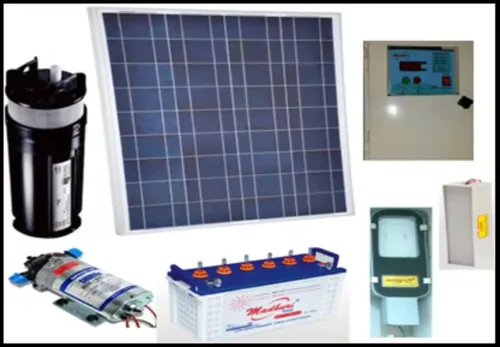
- DC cables
- AC cables
- Connectors
- Protection equipment
- Earthing
- Distribution arrangements
- Isolation equipment
- Monitoring
Differences in these components can partly explain price variations.
Identify Exclusions
A low quotation can become expensive later if important items are excluded.
Ask specifically about civil work, additional cable requirements, structural modifications, lifting arrangements, special access, documentation assistance, batteries, monitoring, and other possible extras.
Written clarity is preferable to assumptions.
Compare Warranty Coverage
Separate equipment warranties from workmanship or installation support.
Understand who provides each warranty, what it covers, and what process applies if a problem develops.
Evaluate Long-Term Value
The cheapest proposal is not automatically the lowest-cost solution over the operating life of the system.
A technically appropriate installation with suitable components, monitoring, safe electrical practices, and accessible support may provide greater long-term value than a poorly defined low-cost package.
Madhuri Solar works across residential, commercial, agricultural, institutional, rooftop, off-grid, and hybrid renewable energy applications.
Before finalizing Solar System Price, customers should place competing quotations side by side and compare capacity, equipment, installation scope, safety components, warranties, storage, exclusions, and support.
Once those elements are aligned, the final price becomes far more meaningful—and the purchasing decision becomes much easier to justify.
Keywords