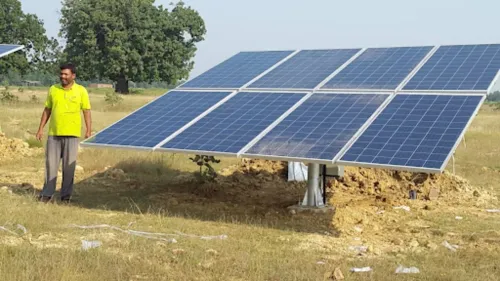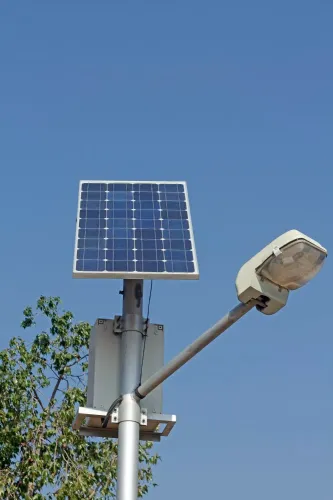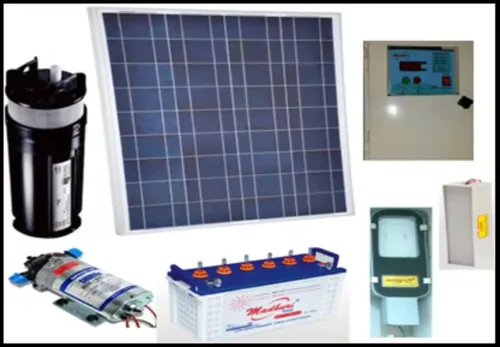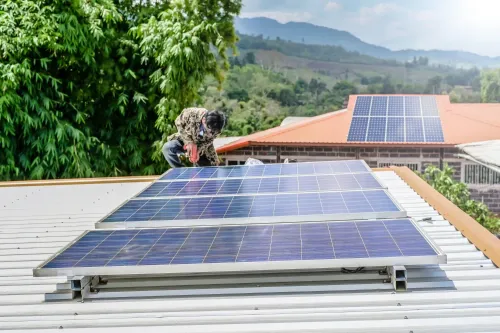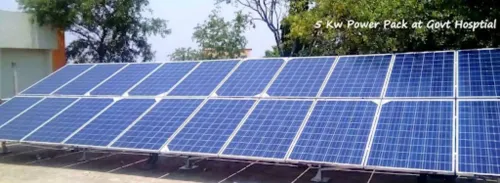
The Rooftop Solar Price for two properties can differ even when both owners request similar system capacities. The reason is that rooftop solar is an engineered installation rather than a single packaged product.
Roof characteristics, equipment selection, mounting design, electrical requirements, access conditions, and optional energy storage all influence the final project cost.
Roof Type Changes Installation Requirements
A concrete terrace and an industrial sheet roof require different mounting approaches.
Even two concrete roofs can differ because of parapet heights, water tanks, service structures, available open area, and shading.
Before comparing quotations, determine whether the providers have based their proposals on actual roof conditions.
Module Efficiency Can Matter
When roof area is limited, module efficiency becomes especially relevant.
Higher-output modules may allow a required system capacity to fit within a smaller usable area, depending on the layout and equipment selected.
Where space is abundant, the design priorities may be different.
This is why evaluating only the number of panels can be misleading.
Mounting Structure Design Influences Cost
Panels need to be supported at an appropriate orientation while remaining securely installed.
Structure requirements can vary because of:
- Roof configuration
- Desired mounting height
- Structural considerations
- Module arrangement
- Maintenance access
- Site exposure
- Installation method
Extremely low quotations should be reviewed carefully to understand what structural specifications have actually been included.
Electrical Distance Matters
The distance between the solar array, inverter, distribution point, and other electrical equipment affects cable routing.
Longer or more complex cable routes may increase material and installation requirements.
The proposed inverter location should also be appropriate for operation, maintenance, ventilation, and protection.
Storage Creates a Different Cost Category
Adding batteries changes both equipment requirements and system functionality.
A property owner seeking electricity bill reduction through a grid-connected system has a different requirement from someone seeking backup during outages.
Before requesting prices, decide whether energy storage is essential. This prevents comparisons between systems designed for completely different purposes.
Commercial Projects Need Load Analysis
Businesses, institutions, and industrial facilities should examine their load profiles rather than simply applying residential assumptions.
Properties with substantial daytime electricity consumption may be able to use a large portion of generated solar electricity directly.
Operational schedules, holidays, seasonal demand, and future expansion should also be considered when selecting capacity.
Look Beyond Initial Cost
Solar is intended to operate over a long period. A lower initial price may not necessarily represent better value if the proposal compromises system design, component suitability, monitoring, installation quality, or maintenance accessibility.
Instead, evaluate:
- Technical specifications
- Warranty coverage
- System design
- Estimated generation assumptions
- Installation scope
- Safety provisions
- After-installation support
Madhuri Solar serves different renewable energy requirements across homes, agricultural applications, commercial properties, institutions, and other facilities.
Anyone comparing Rooftop Solar Price should request a clearly defined scope rather than relying on an approximate price alone.
Once system capacity, roof conditions, equipment specifications, mounting requirements, electrical scope, storage requirements, and installation responsibilities are defined, quotations become much easier to evaluate on a fair basis.
Keywords